Skip to content
An official website of the OECD. Find out more
Created by the Public Governance Directorate

This website was created by the OECD Observatory of Public Sector Innovation (OPSI), part of the OECD Public Governance Directorate (GOV).

How to validate authenticity

Validation that this is an official OECD website can be found on the Innovative Government page of the corporate OECD website.

To improve the Government's response to problems and delivery of products, the Office of the Prime Minister of Croatia introduced Agile methodology and Agile teams, which mimicked startups in using iterations and learning to inform their next move. All governments have policy challenges that seem too complex to be solved. These challenges span across several departments, have some areas where jurisdiction of departments is unclear, and any intervention would have serious impact on all citizens.
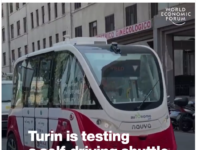
“Sperimentazione Italia” is a horizontal sandbox that allows companies, universities, research bodies, university startups and spin-offs from any sector (except excluded areas of application) to test pilot projects in the field of digitalisation and technological innovation, by derogating regulatory constraints. The main objective is to conduct live experiments in a controlled environment under the regulator’s supervision and collect data to promote future-proof regulations.
The UK government launched a new “youth hub” offer of employment services to young people affected by the disruption of the covid-19 pandemic. Through four days of workshops with key stakeholders, which included engaging young people, Impetus ran a theory of change process to enable one of the flagship hubs to co-design their new service to best serve young people. This is the first time that Impetus has applied its theory of change tools, and its impact focus to a government policy…
The UK Government Policy Profession has piloted a new model called Shared Policy Capability Project to support department leaders and policy makers undertake a facilitated self-assessment of their policy environment and identify opportunities for improvement. Through this the government aims to build capability at a department level and enable policymakers to take an active role in improving the environment in which they make policy.
Young Entrepreneurship Mentors is an education project to disseminate the culture of innovative and impact entrepreneurship. It aims to acheive this through agile methodologies that empower students from integrated High Schools in the Federal Network of Science and Technology Education to undertake sustainable solutions for their community through science, technology, and innovation.
The techDetector is the first technology radar giving an overview of emerging technologies that have the potential to influence the area of sustainable development in the future. It lists future technologies from all sectors of sustainable development and assesses their potential impact on sustainability and gender equality. The techDetector helps inform, sensitize and support foresight processes, enabling better decision-making by providing sound information on technological developments.
Seeding Drive to disperse millions of Samar seeds across stretches of land. To quickly and efficiently disperse the seeds, MOCCAE used drones with specialized seed-dispersing mechanisms. MOCCAE spread the seeds across seven locations- the total area covered during seeding was 21 sqkm. MOCCAE dispersed approximately 6 million and follow up the important areas with one million seeds, we got result of 12.19% growth rate with time and cost efficiency.
„Gemeinsam Digital: Berlin“(Together Digital: Berlin) combines the digital and smart city strategies. We define smart as solving future challenges in creative, open, experimental and participatory ways. This strategy helps to establish new work approaches, agile methods, competence building, and a systematic knowledge transfer between the administration and its inhabitants. By aligning technologies, methods, and cultural processes, it supports existing strategies to reach their respective…
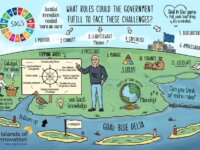
Together with partners from 5 other European countries, the Province of Fryslân developed an innovation model (so-called Tipping Approach) to catalyse and stimulate bottom-up innovations and harness ideas from local stakeholders. Complementing this, a governance model is being developed to provide civil servants with tools to implement these innovations in the social process in a simple and user-friendly way.
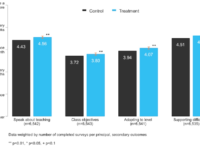
Providing school principals with simple rules of thumb improves school management practices and support to teachers in cost-effective and scalable ways. Evidence from an impact evaluation by the Ministry of Education in Guatemala and the Behavioural Insights Team showed that, an intervention inspired by the behavioural science literature, increased the frequency and quality of school management practices by principals and the satisfaction of teachers in Guatemala.