
The Lab is an all-of-government neutral space enabling agencies to collaboratively innovate to make it easier for people to access government services. It's a design & development lab to experiment, drive and enable the systemic change of government for the benefit of society. We are providing a way to direct public funding to systemic improvements, horizontal efforts around shared goals, capability uplift, high value reusable components and actionable innovation for all participating agencies.
Innovation Tag: Futures and Foresight
The Finnish Government has piloted a new innovative operating model based on co-creation and networking widely within the society. This so-called ‘The Ecosystem Forum’ aims at boosting human-centric digitalisation policy and data economy. It is a new way to formulate policies, prepare decisions and improve implementation. The forum is led by the State Secretary at Prime Minister's Office. In addition, the Prime Minister's Office has an active role in the facilitation of the network.
Over a third of U.S. federal employees are eligible to retire in the next five years, yet only 6% of employees are under 30—a pressing issue given the rate of innovation. Piloted as an effort between agencies and a student-led nonprofit, the Civic Digital Fellowship recruits the next generation of technologists—students and recent grads—pairing them with in-need agencies. It has scaled to six agencies, and is an attractive on-ramp for technical students into public service.
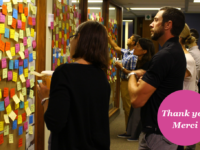
The OEE established a Social Innovation "UnLab" (SIU) to test an embedded innovation model and amplify energy efficiency policy and service impacts in Canada. The SIU creates value for energy efficiency stakeholders in three ways:
Building relationships and capacity for energy efficiency policy and service innovation;
Generating evidence and collective learning by co-creating and testing insights and interventions;
Amplifying impacts by scaling learning and implementing what works.
The Provincial Council of Gipuzkoa presents the program entitled Etorkizuna Eraikiz (Building the Future) as an innovative program for a more open and collaborative governance. Etorkizuna Eraikiz incorporates public deliberation with the citizenship for the design of public policies, ensuring the effectiveness, efficiency and plurality of this participation. The program consists of an active experimentation exercise to develop the future of the territory.
The Republic of Estonia is the first country to offer e-Residency— a transnational digital identity available to everyone in the world interested in managing a location-independent business. E-Residency enables secure and convenient digital services that facilitate credibility and trust online.
The lab brings citizens and stakeholders together in a structured design process to form a common realisation of present challenges and pathways to the future. The stakeholders engaged are all identified and relevant to the target group. They are part of a national ecosystem from user, practitioner to policymakers locally, regionally and nationally. The design methods used in the lab are visualizations of processes, gap analysis and aesthetic disruption to enable needed cultural transformation.
My Open Library is a customer service delivery project which extends public library opening hours from 8.00 am to 10.00 pm, seven days per week. New technology allows users to access the buildings and services at times that suits them best.
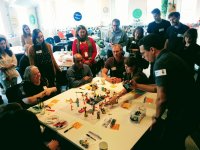
A collaboration between government and community, Systemic Design eXchange (SDX) is an Edmonton-based community of practice for people interested in learning about systemic design as a methodology for addressing complex, real world issues. Together, we explore systems thinking, design thinking, and change lab approaches. With a bias towards learning by doing, SDX aims to be a watering hole where multiple sectors can come together, learn together, and act together.
As part of the strategy about bringing schools into the digital era, 72 middle schools (pupils from age 11 to 15 years) have been selected to receive support for integrating digital technology into their teaching and the school administration. These 72 pilot “collèges connectés” are meant to be innovation and change leaders.