Skip to content
An official website of the OECD. Find out more
Created by the Public Governance Directorate

This website was created by the OECD Observatory of Public Sector Innovation (OPSI), part of the OECD Public Governance Directorate (GOV).

How to validate authenticity

Validation that this is an official OECD website can be found on the Innovative Government page of the corporate OECD website.

The GovTech Lab is a public sector team focused on encouraging the creation and use of innovative solutions for the government. The GovTech Lab helps the public sector identify challenges that can be solved with emerging technologies, engages startups and SMEs, creating innovative solutions and accelerating startups in #GovTech and #TechForGood space.
The digital economy is booming in Medellín. So is digital tax evasion. To identify potential tax evaders, the local treasury department used to detect unregistered online stores manually. Since the use of social media for economic activities has grown exponentially, the agency has now developed a bot that automatically scrapes Instagram for such stores - and officers can use their time instead to work with store owners to formalize their businesses.
Societal challenges such as demographic change affects rural areas in particular. The Social Foresight Lab is an innovative participatory approach towards rural development and technology transfer to address these challenges. It combines foresight, needs assessment and strategy development. Rural areas benefit, as it takes into account regional characteristics, initiates new cooperations among regional stakeholders, and integrates technological and social innovations into regional development.
To encourage data-driven decision making in public sector, University of Latvia and Microsoft Innovation Center developed a “Data challenge” platform and methodology. Aim of the initiative is to bring together teams of public sector officials and data analysts and in few weeks to create several AI solution prototypes for a specific public sector challenge giving the organisation an opportunity to explore innovative, data-driven solutions that they eventually can develop and implement in…
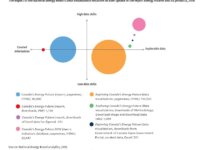
In 2016 the NEB launched the Data Visualization Initiative to face the challenge of producing usable and useful data to go beyond using new technologies to deliver better service to citizens. It created multiple products from the same information to expand public participation in the energy dialogue and enable evidence-based decision-making. These products include interactive data visualizations and other materials, such as high school lesson plans, as a new way to engage experts and nonexperts.
Our Court launched a twitter account, seeking to rebuild trust. In Argentina, the justice system is the institution with the lowest public trust. Through this account we publish every judgement, hearings, the staff resumes and the Judge's personal leaves. This is not the norm in our country and constitutes a pioneering innovation that demands deep cultural change from public servants and our users too. We improved engagement with the public and inspire other teams to deliver a more efficient…
Community Connects is a pilot project that came out of the Transportation Innovation Lab. Problem/Opportunity: Cape Breton Regional Municipality (CBRM) is a region with high levels of poverty and unemployment. Innovation: Taxi service, doorstep pick-up, defined drop-off points, flat rate: $7 seat. Why innovative? In short, the approach (social innovation lab) and those that were engaged (first-voice participants).
The prolonged economic crisis in Europe has led to a growing feeling of alienation among citizens from the main decision-making centres. The co-creation research methodology for co-operative governance is an innovative approach to stakeholder engagement in which policymakers and researchers work as a team in dialogue spaces configured to address different territorial challenges. A participative, open and collaborative governance for the economic development of Gipuzkoa is therefore being built.
The Northern Ireland (NI) Public Sector Innovation Lab has organised a hackathon, “Hack the Pain,” to address these needs of an underserved group: people with persistent pain. These individuals need for better information services for self-management, and the projects that emerged from the hackathon include a virtual reality app for mindfulness, a pain tracking app and a website of information on pain management techniques.