
Skip to content
An official website of the OECD. Find out more
Created by the Public Governance Directorate

This website was created by the OECD Observatory of Public Sector Innovation (OPSI), part of the OECD Public Governance Directorate (GOV).

How to validate authenticity

Validation that this is an official OECD website can be found on the Innovative Government page of the corporate OECD website.

View as: Map

Filter by:

Countries

Level of government

Sector

Year of launch

Stage of innovation

Recognition

Innovation Tags

Innovations:
0
This website, as well as any data and map included herein, are without prejudice to the status of or sovereignty over any territory, to the delimitation of international frontiers and boundaries and to the name of any territory, city or area.
Gyeonggi Climate Insurance is a universal public climate insurance program that automatically covers all 14.2 million residents of Gyeonggi Province without requiring enrollment or premium payments. Fully funded by the provincial government, the program provides financial protection against health damage caused by climate-related risks such as heatwaves, cold waves, infectious diseases, and climate-related accidents.
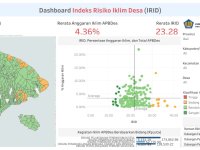
Indonesia ranks as world's second most disaster-prone country, with climate-related losses reaching Rp50 trillion (±USD 3 billion) annually. Over 75,000 villages bear the greatest burden of climate and disaster risks, yet often lack the data needed to allocate climate and disaster budgets effectively. IRID Dashboard, developed by the Ministry of Finance, integrates climate risk indices, village budgets, and fiscal transfers into one free, map-based platform. Users can filter and analyze data…
Gaeilge365 was created to respond to growing demand for bilingual public services while opportunities to use Irish in everyday local authority services remained limited. It redesigns existing services to create real speaking opportunities, increasing annual use from 10,000 to over 26,000 in one year, with a target of 150,000 by 2028. It is innovative because it replaces translation‑based compliance with a scalable, measured service model that delivers clear social impact.
New Brunswick faces an urban development challenge driven by record population growth, which also impacts biodiversity flow on the outskirts of urban regions. This Project used advanced virtual simulation technology to help municipalities evaluate urban development and infrastructure solutions before implementation. By creating digital replicas of cities and rural land use, decision-makers can test hundreds of scenarios and make evidence-based choices that improve territory management.
“Madrid, Digital Capital” is a city-wide transformation model that redesigns how Madrid delivers services and makes decisions using real-time data and digital tools. It simplifies procedures, improves daily services and helps the city respond faster to citizens and businesses. It is innovative because it turns digital transformation into a single, measurable system for running government, not just isolated projects, and that is fully user and citizen centred and also environmental centred.
Many rural communities face difficulties accessing government services due to distance, ageing populations and digital barriers. Navarra created Mobile Citizen Offices: travelling public service units that bring administrative procedures and digital support directly to small municipalities. By reversing the traditional model—government travelling to citizens—the initiative reduces territorial inequalities, simplifies access to administration and strengthens trust in public institutions.
Government digital systems can create invisible barriers for civil servants and citizens. Experiência.Gov is an evidence-based UX methodology created by public servants at Brazil’s Ministry of Management and Innovation in Public Services to identify and eliminate these frictions. The approach combines behavioral science, observation of real use, and agile prototyping to turn usage evidence into concrete improvements in government digital systems.
Public administration runs hundreds of projects and processes, but most public events still focus only on success stories. Spodlet za zalet creates a safe space where public servants openly share mistakes, wrong assumptions and unexpected turns, and reflect on what they learned. Inspired by Fuckup Nights, it turns failure into a practical source of learning and trust which encourages public sector innovation.
Ibagué faced two challenges: symbolic participation, with proposals often disappearing in paper-based processes, and fragmented manual reporting. “MiGestión” addresses these challenges through Lego® Serious Play® workshops, where citizens build their dream city while proposals are captured on tablets, validated on site, and georeferenced. An in-house platform links these inputs to the Development Plan, Action Plan, budget (POAI), and investment projects (PIIP). Today, over 2,700 citizens…
Despite ambitious climate pledges, a persistent “last-mile” gap remains: individual climate actions are often undervalued within existing frameworks. Gyeonggi Province addresses this gap by converting verified citizen actions into measurable public value and rewarding participants with local currency to support local economies. By reinvesting these rewards in climate technologies, the initiative transforms citizens from policy beneficiaries into active co-creators of a sustainable future.