
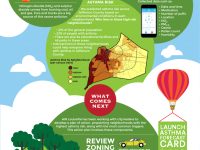
The city of Louisville has one of the highest asthma rates in the U.S. AIR Louisville was a community program that used smart connected inhalers to help improve the asthma problem in Louisville. AIR Louisville enrolled 1,147 citizens of Louisville to improve asthma for everyone. Citizens benefited by receiving personalized care. Louisville Metro benefited from crowdsourced, hyperlocal data of air quality challenges our residents face.
Case Study Library
Where innovations are collected and shared to disseminate and replicate good ideas

Innovations:
0
This website, as well as any data and map included herein, are without prejudice to the status of or sovereignty over any territory, to the delimitation of international frontiers and boundaries and to the name of any territory, city or area.
The Michigan Economic Development Corp (MEDC) teamed up with private partner Patronicity to launch a first of its kind crowd-granting program to help create vibrant communities throughout Michigan. The crowdgranting model streamlines the granting process, increases community engagement and results in more sustainable projects that better serve and impact the communities they are within.
Of the 170 completed projects, 165 of them exceeded their crowdfunding goal at a ratio of total private…
Malaysia established the country’s first facilitation, monitoring and evaluation platform, the 1DANA portal. It places a particular emphasis on Research and Development, commercialisation and innovation output. This works aligns with Vision 2020 and beyond political agenda.

The Memeza Home Community Alarm is a cost-effective public alarm system designed for low-income communities, that leverages advanced communication technologies for rapid response to incidents. It aims to bridge the gap between communities vulnerable to crime, and the police services that serve them.
The What Works Network is a new initiative to improve the use of high quality evidence when government makes decisions about public services. It is one of the first times any government has prioritised evidence to inform policy and practice through a national approach.
The Regione Emilia-Romagna has, since 2014, developed a pilot strategy to promote and coordinate the use of social media by local police departments.
Keeping in touch with citizens is the core business of every local police, but today, traditional communication tools and skills are not enough to respond to citizens' needs and demands.
As such, we established a network of people inside local police departments to share expertise in the area of social media.
My Municipality (Meu Município) a free public portal that organizes and makes available the financial performance of 90% of the Brazilian cities in a intuitive, user-friendly way. It is used for citizens to understand, monitor and compare how Brazilian municipalities collect and spend our money. My Municipality is also designed for public managers in their analysis and decision-making about the city's directions.
The Asker Welfare Lab is a lab guided by the principle: "No decision about me, shall be taken without me."
Asker Welfare Lab is a concept for service delivery, solely centered on the citizen, in which all relevant municipal services, together with external partners of collaboration, invest together, aiming to raise the living standards, thereby bettering the quality of life of each individual and family in the program. All the services do still have one common factor - the citizen. Their…
The Data Science Accelerator is a capability-building programme which gives analysts from across the UK public sector the opportunity to develop their data science skills. Aspiring data scientists work on a project of real business value, supported by an experienced mentor. Graduates of the programme take their new-found skills back to their respective organisations.
The Michigan Economic Development Corp (MEDC) teamed up with private partner Patronicity to launch a first of its kind crowd-granting program to help create vibrant communities throughout Michigan. The program revolutionizes the granting process, in part, by making the community the final review committee. If the project garners enough community support through crowdfunding, it will receive a matching grant.
With crowdfunding success rates across the industry at around 5-10% for projects…