Skip to content
An official website of the OECD. Find out more
Created by the Public Governance Directorate

This website was created by the OECD Observatory of Public Sector Innovation (OPSI), part of the OECD Public Governance Directorate (GOV).

How to validate authenticity

Validation that this is an official OECD website can be found on the Innovative Government page of the corporate OECD website.

View as: Map

Filter by:

Countries

Level of government

Sector

Year of launch

Stage of innovation

Recognition

Innovation Tags

Innovations:
0
This website, as well as any data and map included herein, are without prejudice to the status of or sovereignty over any territory, to the delimitation of international frontiers and boundaries and to the name of any territory, city or area.
When applying for state aid or other services without the means or knowledge to do it online due to the digital gap, it usually takes a day or waiting in queues and filling out paperwork. Communities have thought and offered a grassroot solution: store owners helping their peers to get online procedures done in their business, in exchange for a small fee. It is a simple innovation, yet effective when it comes to decentralize public services, foster digital inclusion, and strengthen local markets
Strategic planning has turned into bureaucracy circus, without really moving the needle. The City of Ashdod has pioneered a new strategic planning model, in collaboration with Insights.Us. The new methodology enables city leadership to define key measurable outcomes, harnessing cross-silos action plans. The digital platform was designed to celebrate success stories, and connect the community, allowing an inclusive whole-of-city approach.
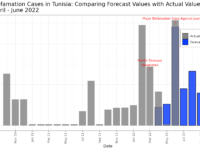
The hard-fought gains of democratization have come under attack in many countries. To reverse this trend, policymakers and civil society need new tools to navigate sophisticated forms of democratic erosion. We combine recent advances in machine learning with massive webscraping to produce high-frequency data and forecasts predicting where democratic backsliding will occur and the specific forms it will take. We equip pro-democracy forces with advanced warning to guide more strategic responses.
The rate of innovation often exceeds the speed at which regulatory systems can adapt, blurring lines between sectors and cutting across transitional regulatory and geographical boundaries. The RPF aims to keep the UK at the forefront of regulatory thinking and experimentation. It sponsors projects, led by regulators, aiming to help create a UK regulatory environment that encourages business innovation and investment. It is market-led and uses real-world innovation settings to deliver.
The Government of Armenia has launched “iGorts” - an unprecedented program that invites Diaspora Armenian professionals to work in Armenia's state institutions. Within the framework of the program, Diaspora Armenian professionals are placed in state agencies in need of their expertise and have the opportunity to lend their experience and knowledge toward improving and developing the state institution and its policies and programs.
National Corporate Innovation Index (NCII) is a comprehensive capacity building platform developed by the State Agency for developing innovators in the public sector. NCII means measuring the organization's innovation ability and success, and taking measures to build an innovation culture within the organization. With the creation of NCII, there is direct support for finding solutions to the difficulties and problems faced by state organizations in the implementation of their daily activities…
With the Quality Tools an organisation can evaluate, monitor and compare the quality and use of its services within and between organisations. The tools include a Self-assessment, Customer Feedback and Utilisation Rate Measurement tool and are free of charge. The tools were developed primarily for public sector organisations to help them develop customer-oriented digital services and improve knowledge-based management. On a national level the tools provide data on the state of digitalisation.
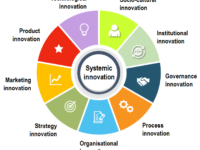
Becoming a circular economy entails a deep transformation of industry, consumer behavior and policy. Traditional innovation funding focuses on technology, punctual projects and (single) companies, which alone fail to bring the required systemic change. Hence, the Flemish government launches the subsidy programme Living Labs Circular Economy for projects tackling complex challenges, with a high ambition level, in co-creation with very diverse stakeholders and employing system innovation methods.
How to bring new ways of working and problem-solving tools to the Estonian public sector? Over the course of a year and a half the Public Sector Innovation Team of Estonia developed a design sprint format suitable for the Estonian public sector. By constantly adapting and improving the format the Innovation Team has seen that it is a highly effective tool for spreading design thinking methods and generating enthusiasm around them.
We live in an infodemic context. A lot of data doesn't mean good data. This brings to question the information sources and the data itself. Decision-makers don’t understand citizens’ needs and act based on uninformed decisions, and citizens feel neglected. This generates a systemic lack of trust. Citibeats' ethical AI makes helps governments interpret the huge quantity of data exchanged every day by citizens in real time, understand their needs, and make faster and better-informed decisions.