
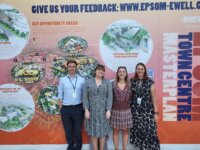
The PropTech Engagement Fund was launched in 2021 and has worked with 41 Local Authorities to date on accelerating the adoption of digital citizen engagement tools and transforming community involvement in placemaking. Our ongoing programme is the largest UK Government PropTech Programme, leading on how to work with industry, tech start ups and local governments to increase the diversity and positivity of placemaking conversations and to fast track new digital policy and local housing delivery.
Case Study Library
Where innovations are collected and shared to disseminate and replicate good ideas

Innovations:
0
This website, as well as any data and map included herein, are without prejudice to the status of or sovereignty over any territory, to the delimitation of international frontiers and boundaries and to the name of any territory, city or area.
Council to the street is an innovative strategy to strengthen democracy through citizen participation. It is a strategy that brings the city's institutions out to listen and respond to citizens in public spaces. Citizens identify their priority needs and requirements and in a public session the Council and the Mayor's Office respond to them. The citizens should be the overseers of the commitments reached in the space. During the process the citizenry is strengthened and accompanied.
Citizens' assemblies (CAs) were incorporated in the new Law on Municipalities in 2005. As an opportunity to strengthen participatory processes, and to improve participatory decision-making methods at local level, Participation Task Forces (PTFs) were established. The innovative nature of the PTFs is that for the first time elected municipal councillors, appointed municipal officials, and representatives of CAs worked together on developing participatory policy proposals for their municipality.
Tackling the effects of rising urban heat goes beyond objective physical measurements. For sure, technical services are in need of blended indicators about the effects of local policies: under which conditions tree planting, fountains, urban design contribute to reduce island heats. The project has created such tools, but is also willing to take seriously into account the subjectivity, the perceived heat, the sensations of our citizens, for they contribute hugely to our collective resilience.

In 2017, Korea opened the online platform allowing the public to make policy suggestions, ‘Gwanghwamun 1st street’ as an effort to expand Direct Democracy. Following this lead, Gwanak-gu developed its own online platform, ‘Online Gwanak-gu Office’. ‘Online Gwanak-gu Office’, which is exclusively for Gwanak-gu citizens, utilized user participation during development, and its innovation comes from the integration of various existing public participation routes.
In an increasingly digital world, Participa.gov represents our vision for civic participation in political decision-making processes. Participa.gov is the Portuguese Public Administration's centralized, cross-cutting platform for facilitating participatory processes at all levels of government. It employs cutting-edge technology to ensure that citizens can actively participate in policy decision-making via secure and transparent mechanisms that foster trust.
Case Study
National AI supercomputing platform deployed and offered to start ups through a public call
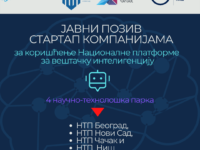
Recognising the importance of artificial intelligence as well as the innovative capacity of start-ups, to support the development of innovative products and ideas, the Government of Serbia deployed a national supercomputing AI platform and offered its resources and trainings free of charge to innovative companies and startups through a public call for proposals.
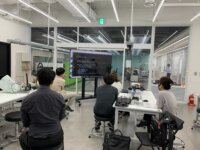
Small and medium-sized companies often cannot afford investments in Artificial Intelligence technologies. Through AI Friends project, AI became more accessible, affordable, and familiar for entrepreneurs and citizens. AI festival, training, co-working spaces, and pilot solution consulting is operated through the cooperation of universities, research institutes, industries, government, and citizens over the last four years.
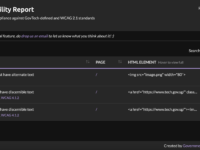
Purple A11y is a customisable, automated web accessibility testing tool that allows software development teams to find and fix accessibility problems, to ensure all users have access to inclusive digital services, especially the elderly and persons with disabilities (PWDs). It is an open-sourced solution to automate periodic tasks and the testing of government digital services.
Public healthcare in Serbia is transformed through innovative use of mixed reality technology powered by Artificial Intelligence, that increased efficiency and quality of healthcare, minimized risks and efforts, and optimizes procedures. Through remote collaboration, doctors have the same insight into patient’s condition without the need of physical presence, enabling joint real time inputs and medical interventions with experts from anywhere, as well as remote education for medical students.