
In 2021, SIRA clawed back $91 million in excess insurer profit earned on the sale of compulsory motor accidents insurance and returned it to NSW drivers. This move was made possible after the 2017 reforms introduced a transitional excess profits and losses (TEPL) mechanism that was designed to eliminate insurer ‘super profits’ of the past. To our knowledge, the activation of this mechanism to claw back excess insurer profit and return it to the people was a world first.
Country: Australia
Case Study
Renovate or Rebuild: Using television to support the transition to sustainable housing in Australia
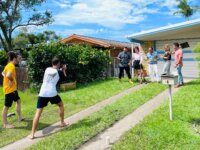
Renovate or Rebuild was a collaborative project that set out to increase the uptake of sustainable homes in the Australian residential sector. The show took an innovative approach to embed behavioural and building science into an engaging, yet informative and impactful TV series, that promoted and normalised sustainable homes. Research estimates this project could save Australians $600 million on their energy bills and would cost less than $1.60 for every tonne of greenhouse gas abated.
Case Study
A co-created Philosophy of Care for the development and establishment of the new Urgent Mental…
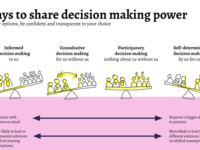
When planning began for a first-of-its-kind Urgent Mental Health Care Centre as an alternative to a failing emergency department experience, a new standard that centred people with lived experiences in system reform decisions was needed. People with lived experiences came together to co-create a philosophy of care for the centre that would uphold service integrity, hold implementation providers accountable, and communicate the care experience and service culture that people expect.
Aboriginal Children in Australia are 11.5 times more likely to be placed in out of home care then non-Aboriginal Children. Marram-Ngala Ganbu is an Aboriginal designed and delivered Court based program that seeks to provide a more effective, culturally appropriate and just response for Aboriginal families through a court process that enables greater participation by family members and culturally-informed decision-making.
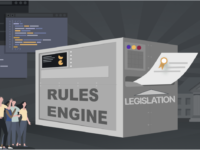
The Australian Government - Dept of Finance sponsored a Proof of Concept (PoC) that looked at how Rules as Code (RaC) might be provided as a shared utility that can be used to deliver simpler, personalised digital user journeys for citizens. RaC is the process of taking legislation and regulations and turning them into machine-readable code. It provides many benefits to citizens and government, including greater reuse, less duplication, greater transparency and accessibility of rules.
Less than 5% of Small Business (SBs) in Australia take out formal intellectual property protection, with many small business owners putting themselves at risk due to a lack of awareness about the need for Intellectual Property, especially at the point of establishing their business. TM Embed aims to engage these small businesses at critical points of their business journey by building awareness, educating them about trade marks, and simplifying the way in which they engage with the trade ma
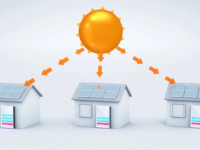
SA VPP is the largest network of home solar and battery systems lowering energy costs for thousands of public housing tenants while providing critical energy network services.
SA VPP has developed innovative approaches to:
Significantly reduced energy bills for vulnerable South Australians
Providing more access to renewable energy for more people
Proving new commercial models for financing renewable energy assets
Driving regulatory reform that accelerates Australia’s energy market…

The Latrobe Health Assembly has undertaken a co-design process with service providers, government and people with lived experience to develop an innovative mental health cafe model for Latrobe City. The cafe has and continues to involve people with lived experience at all levels. It aims to: increase opportunities for peer support and social connection; reduce emergency department presentations for non-emergency mental health issues; and improve mental health consumer experiences and outcomes.
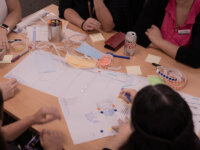
In 2020, the health department in Queensland Australia piloted a novel form of government-university partnership to multiply the department's capacity for frontline clinical innovation. Building on the significant success of our pilot year, this award winning program has evolved into a dynamic ecosystem of clinicians, consumers and academic experts with an enviable track-record of diverse service transformations. This model is now being emulated by many local health services across the State.
We conducted a SMS program trial to inform our efforts to strengthen the home learning environment and support parents of 2 year-old children. Specifically, the trial aimed to: assess parent engagement with an SMS program, assess the impact of the program on positive parenting behaviours such as reading, playing and two way enriched conversation; and inform future efforts to improve positive parenting behaviours.