
The Ontario Ministry of Labour, Immigration, Training and Skills Development (MLITSD) seeks to remove barriers to apprenticeship enrolment, training, and program completion as part of their mandate to increase the skilled trades workforce in the province. Amongst other strategies, these efforts have led to an expansion of existing grant schemes that aim to offset some of the costs of training and encourage training completion. In collaboration with MLITSD, the Ontario Behavioural Insights Unit…
Country: Canada
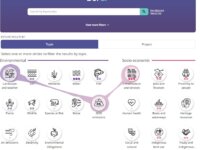
Governments are buried in hard-to-search PDF documents that hold data with great value for citizens, scientists, and public servants. At the Canada Energy Regulator, we developed data science methods to liberate 20 years – and tens of thousands of kilometres – of environmental and socio-economic data from over 1900 PDF documents from oil and gas pipeline applications. We made it easy to search and explore this data in our powerful and user-friendly search tool, BERDI.
As part of Gov. of Canada ininitiatives to measure regulatory burden, ministries have to report their Administrative Burden Baseline (ABB) a metric calculated using a decision tree based on the text of regulations. This is a long and tedious process that requires combing through regulation and manually parse individual provisions. The Regulatory Evaluation Platform automates that process (it takes seconds v. weeks when done manually) and makes it more timely by allowing for weekly refreshes.
IQed (Inquiries/Questions in education) utilizes cutting-edge Democratic Technology in classrooms for the purpose of empowering students and educators in Digital Literacy, Civic Literacy, Dynamic Engagement, Critical Thinking/Problem-Solving Skills and Global Competency Education. IQed enables every student to use their personal devices to explore, investigate and become informed on issues of governance and global matters, so that their voice can positively impact local and global communities.
Nova Scotia has 21 Community Transportation Operators serving mainly vulnerable populations in rural areas. The CTOs were unable to feasibly procure a common dispatch and scheduling solution that met their needs, leaving them with inefficiencies and inability to meet growing needs. The Outpost for Public Sector Innovation designed a new approach to co-designing and procuring solutions to complex challenges. Together with stakeholders, partners and vendors, two viable solutions were developed.
In 2021 Statistics Canada, Canada’s national statistical agency, successfully implemented a new strategy for coding write-in responses to questions asked on the Census of population. Fasttext, a natural language processing algorithm, was applied to 31 questions and approximately 7 million write-in responses that would have in the past been completed by human coders. This innovation significantly increased the coding efficiency by decreasing the time and cost required to code the 2021 Census.
The Program of Applied Research on Climate Action in Canada (PARCA Canada) combines behavioural science (BeSci) insights and methods with robust policy analysis to promote climate action. One of the main areas of focus involves the launch of a longitudinal survey that will, over time, collect data on research questions of interest to the promotion of climate action in Canada (e.g. transportation, home energy use, waste management, engagement with nature, preparedness for extreme weather,…
Impact Canada Challenges have incentivized innovative solutions in the areas of climate action, housing, food, and health. A quasi-experimental impact assessment approach uses tax data (available in most countries) to assess the effectiveness of Challenges by profiling Challenge participants and comparing business performance indicators of Challenge participants vs. non-participants. Requiring only the participant’s business number, this is a no burden, comparative, long-term measurement plan.
- There is need for organ donors.
- According to public opinion polls, approximately 84% of Canadians support organ and tissue donation but only 43% report to have registered.[1,2]
- In British Columbia, Canada, Internal operational data indicates that, between 2016 and 2017, 24,303 organ donation registrations took place through Service BC centres. This number dropped to 14,860 in 2019.
- Considering these circumstances, Service BC has partnered with the BC Behavioural Insights Group to develop…
The Program of Applied Research on Climate Action in Canada (PARCA Canada) combines behavioural science (BeSci) insights and methods with robust policy analysis to promote climate action. One of the main areas of focus involves the launch of a longitudinal survey that will, over time, collect data on research questions of interest to the promotion of climate action in Canada (e.g. transportation, home energy use, waste management, engagement with nature, preparedness for extreme weather,…