
In the Northern Ireland Civil Service, over 70% of absence days are due to staff on long-term sick (absences lasting 20 working days or more). Using behavioural insights, the Lab designed a new suite of letters to support employees when they go off sick. The letters reject traditional formal approaches of absence management in favour of empathy, clarity, and empowerment. Both line managers and staff feel the letters are a huge help in providing the support they need when off sick.
Innovation Tag: Behavioural Insights
Nudge Türkiye undertook a project to increase the uptake of government subsidies by SMEs. Analysis showed our subsidies were used by a limited number of big companies, and government could reach the SMEs who need financial support the most. By interacting more closely with the firms, they clarified the pain points for the SMEs. Based on firms' feedback, organisers created a user-friendly website for explaining subsidies, and sent over 30,000 emails that used behavioural messages to nonapplicant…
The Ministry of Possibilities is a virtual ministry created to incubate and solve the systemic impossibilities of government.
It works by creating time-bound departments experimenting together to ask impossible questions and disrupt the conventional systems with leapfrog solutions that are yet to be explored
Its focus areas & mandate are:
To IDENTIFY impossibilities
To INCUBATE virtual, timebound departments/teams to solve and explore the impossibilities
To EDUCATE and train on the mindset of…
Work 2.0 Lab is a new collaborative working and learning environment. It is available to all agencies and civil servants in government and other organisations involved in the 2-years experiment. The purpose is to promote better, higher quality ideas, solutions and decisions on cross-cutting matters outlined for example in the government program. Work 2.0 Lab provides the structures and platforms (environments, spaces, networks, methods) for collaborative learning needed to work together.
Case Study
Using behavioural insights to increase patient engagement with validation of hospital waiting lists
Administrative validation of waiting list is where patients are contacted by hospitals in writing to confirm if they still require hospital care or wish to be removed from a waiting list. Many patients do not reply to validation letters. This innovation involved a collaborative redesign of the validation letter, the application of a range of behavioural insights to letter design and testing through a randomised control trial.
Dutch Reach Project (DRP) closes a serious gap in existing road safety efforts to prevent “dooring,” a common, feared & at times fatal crash caused when exiting motorists - using their near hand - suddenly throw open their car door into the path of a bicyclist or other vulnerable road user (VRU).
To prevent dooring, DRP promotes the Dutch Reach (DR): reaching across to the door with the far hand to open - a much safer method.
The DR project is already gaining increasing attention and being…
The digital economy is booming in Medellín. So is digital tax evasion. To identify potential tax evaders, the local treasury department used to detect unregistered online stores manually. Since the use of social media for economic activities has grown exponentially, the agency has now developed a bot that automatically scrapes Instagram for such stores - and officers can use their time instead to work with store owners to formalize their businesses.
Societal challenges such as demographic change affects rural areas in particular. The Social Foresight Lab is an innovative participatory approach towards rural development and technology transfer to address these challenges. It combines foresight, needs assessment and strategy development. Rural areas benefit, as it takes into account regional characteristics, initiates new cooperations among regional stakeholders, and integrates technological and social innovations into regional development.
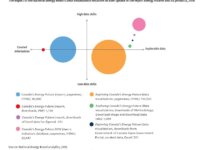
In 2016 the NEB launched the Data Visualization Initiative to face the challenge of producing usable and useful data to go beyond using new technologies to deliver better service to citizens. It created multiple products from the same information to expand public participation in the energy dialogue and enable evidence-based decision-making. These products include interactive data visualizations and other materials, such as high school lesson plans, as a new way to engage experts and nonexperts.
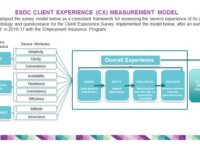
The Client Experience Measurement Survey Model was developed by Employment and Social Development Canada to gather and analyse client feedback to improve service delivery to its clients. Canadians have been able to express their views on government programs and services, which have informed the way programs and services are designed and delivered. The survey allows the tracking of service satisfaction, ease of access, effectiveness of service delivery, and the experience of particular programs…