
UK Government is investing in innovative public policy design expertise. Public policy design has been gathering momentum over the past 10 years. But 2022 was a landmark year for public policy design. For the first time, the UK’s government is sponsoring major networks that champion design as key for making policy and services that drive outstanding public value.
Innovation Tag: Experimentation
Case Study
‘Con Vos’ Network: Digitalization for Effective Governance. Community Markets to Improve Access…

When applying for state aid or other services without the means or knowledge to do it online due to the digital gap, it usually takes a day or waiting in queues and filling out paperwork. Communities have thought and offered a grassroot solution: store owners helping their peers to get online procedures done in their business, in exchange for a small fee. It is a simple innovation, yet effective when it comes to decentralize public services, foster digital inclusion, and strengthen local markets
The rate of innovation often exceeds the speed at which regulatory systems can adapt, blurring lines between sectors and cutting across transitional regulatory and geographical boundaries. The RPF aims to keep the UK at the forefront of regulatory thinking and experimentation. It sponsors projects, led by regulators, aiming to help create a UK regulatory environment that encourages business innovation and investment. It is market-led and uses real-world innovation settings to deliver.
With the Quality Tools an organisation can evaluate, monitor and compare the quality and use of its services within and between organisations. The tools include a Self-assessment, Customer Feedback and Utilisation Rate Measurement tool and are free of charge. The tools were developed primarily for public sector organisations to help them develop customer-oriented digital services and improve knowledge-based management. On a national level the tools provide data on the state of digitalisation.

Since 2020, the City of Austin (COA) and the University of Texas (UT) have collaborated on over twenty diverse research projects under the legal and administrative framework of a five-year, ten million dollar master interlocal agreement (ILA). Among a very few of its kind in the USA, this ILA is an "innovation enabling innovation" that bridges the barriers between two large, extremely complex organizations and fast-tracks the launch of research and innovation projects by four to five times.
Case Study
Exploration Projects – Promotion and development of disruptive and unconventional research in…

The National Agency of Research and Development has piloted a new program, called ‘Exploration Projects’, that allows funding of disruptive, unconventional, and high novelty science and research in all areas of knowledge. The program goals are to promote this type of science, propose the exploration of new and unconventional perspectives, methodologies, theories, and technologies, with the potential for significant reward to its discipline, field of knowledge, as well as society.
Case Study
Renovate or Rebuild: Using television to support the transition to sustainable housing in Australia

Renovate or Rebuild was a collaborative project that set out to increase the uptake of sustainable homes in the Australian residential sector. The show took an innovative approach to embed behavioural and building science into an engaging, yet informative and impactful TV series, that promoted and normalised sustainable homes. Research estimates this project could save Australians $600 million on their energy bills and would cost less than $1.60 for every tonne of greenhouse gas abated.
The Startup GOV.BR Program aims to accelerate strategic digital projects at federal government in an unprecedented and innovative way. By providing technological tools, allocating professionals and assisting them to adopt agile methodologies, it supports a 30-crosscutting-project portfolio with several federal agencies. The initiative has promoted a paradigm shift in the management of public digital solutions, incentivizing agility, resilience and value generation for citizens and general users.
Shanghai Data Exchange (SDE) has initiated a new business racing track of data factor market. SDE has independently developed a data trading system named niDts Intelligent Data Trading System, which provides efficient, convenient, transparent and secure data trading services, enabling the market development of data as a production factor, and fueling the digital transformation of economy, life and governance.
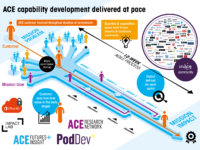
Government struggles to exploit advances in science and technology that could improve public services. The UK Home Office developed a new, cost-effective model to enable start-ups, Small and Medium-sized Enterprises (SMEs), not-for-profits and academia to solve frontline challenges across UK government using diverse, cutting-edge capabilities and expertise. Uniquely, for UK public sector, it uses flexible, novel ways of working and commercial mechanisms to deliver mission impact at pace.