
The Digital Mobile Key is the Portuguese mobile eID solution, for secure authentication in public & private websites.
Instead of relying on different usernames/passwords for each entity, or using their eID Card, citizens now use the Digital Mobile Key, made of a single 4 digits PIN + an OTP(by SMS, email or messaging platform), or a push notification (Digital Mobile Key app)
In addition to authentication, Digital Mobile Key also allows digital signatures, both in a personal or a professional…
Innovation Tag: Open Government
Case Study
National digital Identity and legally binding e-signatures based on Mobile-ID technology branded…
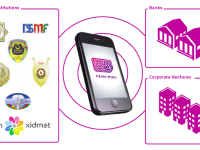
Asan Imza is the world’s fastest growing national digital identity in the form of Mobile-ID, which is secure, trusted and issued by the government of Azerbaijan. Based on PKI (a public key infrastructure) it is an irreplaceable tool empowering across all sectors, from public to private, including financial institutions and Mobile Network Operators, allowing to digitally verify your identity and create signatures equal to handwritten counterparts, regulated by law.
My Municipality (Meu Município) a free public portal that organizes and makes available the financial performance of 90% of the Brazilian cities in a intuitive, user-friendly way. It is used for citizens to understand, monitor and compare how Brazilian municipalities collect and spend our money. My Municipality is also designed for public managers in their analysis and decision-making about the city's directions.
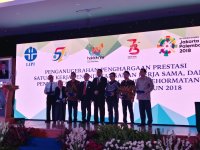
Conditions in Indonesia today are contrary to the principle of openness towards intellectual property (IP). The presence of a digital IP management platform called INTIP DAQU would uncover valuable information of technologies produced through R&D by Indonesian institutions. INTIP DAQU has been utilized by universities, R&D institutions and regional governments on a Free-License basis, while IP data between institutions are interconnected, creating a technology marketplace.

Two decades ago, 80% of Indonesia’s timber exports consisted of illegally-sourced wood. In order to combat this problem and to promote more sustainable forest management, the Government of Indonesia developed an innovative multi-stakeholder approach to ensure that wood products and raw materials would only be obtained or come from sources whose origins and management were legal and sustainable. Thus, the Timber Legality Assurance System (Sistem Verifikasi Legalitas Kayu – SVLK) was born.
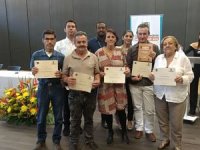
In a context where the channels between institutions and citizens have been broken by corruption, Día Blanco [White Day] is developed to promote bonds of trust and legitimacy among communities. In the last 3 years, more than 35,000 citizens have been mobilized by this innovative experience, which helps social organizations to inform their communities about their management and impact on local development through social accountability exercises.
Insights.US is a tool that helps governments and cities obtain insights directly from their stakeholders, and update participants on their personal impact on the final decisions. This method makes the public be more engaged in the outcome of public governance.
Governments through all over the world are struggling against disaffection from the people. Incapacity to participate in policy-making, it’s a common perception among citizens.
Citizens has the right not to participate, but administrations has to ensure the right to get involved in policy-making.
IREKIA was the first participation portal in Spanish & Basque languages and it has been made in Open Source Software and in its recent version offers and Government Program public tracking tool.

Better Reykjavik is a co-creation project of the Citizens Foundation, Reykjavik City and its citizens that connects them and improves trust and policy.
It’s a platform for crowdsourcing solutions to urban challenges and has multiple democratic functions: Agenda setting, Participatory budgeting and Policymaking.
Innovations include unique debating system, crowd-sourcing, submission of multimedia content and extensive use of AI to improve the user experience as well as content submitted.
Institutions in the Greek government upload their acts and decisions on the Transparency Portal. Each document is digitally signed and assigned a unique number ensuring that acts and decisions are not valid unless published online. An open data tool enables the re-use of published information. The direct accountability brought by means of the Portal upon the administration, provides fewer opportunities for corruption since citizens and interested parties can monitor the publications and report…