
In Hungary, navigating government services meant deciphering bureaucratic language across dozens of unconnected portals; most people queued at a government window instead.
The Digital Citizenship Programme (DÁP) reorganised this from the citizen's perspective: one mobile-first ecosystem with digital identity, binding e-signatures, and services organised around life events.
Within 18 months, 1.66M citizens registered voluntarily, completing now in minutes what previously demanded a visit in…
Case Study Library
Where innovations are collected and shared to disseminate and replicate good ideas

Innovations:
0
This website, as well as any data and map included herein, are without prejudice to the status of or sovereignty over any territory, to the delimitation of international frontiers and boundaries and to the name of any territory, city or area.
Case Study
Designsystemet – A cross-government design system improving accessibility and efficiency in…
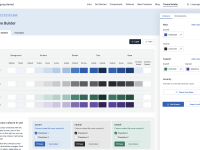
The Norwegian government has developed Designsystemet, a shared foundation for building accessible and consistent digital services. It provides reusable UI components, design guidelines and patterns that help organisations develop services faster while meeting accessibility requirements. Developed collaboratively across government, Designsystemet is technology-agnostic and recognised as a Digital Public Good, meaning organisations worldwide can use, adapt and contribute to improving it.
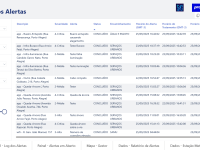
Conecta is a platform that allows public administrators to use technology to anticipate problems faced by cities during extreme weather events, such as flooding, landslides, accidents, and fallen trees. The platform integrates and unifies real-time alerts from different technological sources, enabling faster decision-making and more effective emergency response. Additionally, all the data generated and compiled will allow society to understand new reality and measure how efficiently public…
Government digital systems can create invisible barriers for civil servants and citizens. Experiência.Gov is an evidence-based UX methodology created by public servants at Brazil’s Ministry of Management and Innovation in Public Services to identify and eliminate these frictions. The approach combines behavioral science, observation of real use, and agile prototyping to turn usage evidence into concrete improvements in government digital systems.
Many citizens face difficulties navigating government websites because information is often complex, overly technical, or gender biased. To address this challenge, Tesorería General de la República developed AInclusiva, an AI tool that scans institutional content to provide instant recommendations for clearer, more empathetic, and inclusive communication. This innovation automates the alignment of public data with official accessibility standards, creating a scalable model to ensure no one is…
Case Study
Shared Services Center “ColaboraGov”: An Innovative Model for Delivering Administrative Services…
In order to enable strategic ministerial expansion without increasing costs, ColaboraGov centralizes the sharing of administrative support services among 13 ministries. It ensures savings in resources, gains in scale and quality, and standardized service provision. It comprises more than 41,000 civil servants, 374 services and has an impact on 10 areas - such as human resources, finance and logistics - thus making it easier for the government to direct its efforts towards final public policies.
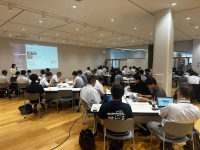
Digital Transformation Co-Creation Platform enables national and local governments to co-create policies and services through knowledge sharing and mutual learning. In Japan, diverse knowledge and challenges exist across about 1,780 local governments but are not adequately shared due to hierarchical communication structures. Digital Agency has developed a co-creation ecosystem where government officers nationwide can engage in open, flat, and two-way communications as individuals.
Complex government documents may confuse citizens, making it difficult to access services such as pensions or benefits. This work engages GenAI to rewrite these texts in plain language, maintaining legal accuracy while increasing clarity. Focused on the Service Pages of Italy's National Institute of Social Security portal, which serves 45 million users, AI surpassed human experts in user preference, enabling the Institute to communicate inclusively and at scale.
The study integrates Artificial Intelligence (AI) techniques, and a digital twin methodology to process and interpret urban data streams derived from citizen interactions with the city's coordinate-based problem mapping platform. Using an interactive GeoDataFrame within the digital twin methodology, dynamic entities facilitate simulations based on various scenarios, allowing users to visualize, analyze, and predict the response of the urban system at
Case Study
High Impact Service Provider Case Study: Innovating the Individual Assistance Program For Survivors…
The Federal Emergency Management Agency (FEMA), a component of the United States’ Federal Government, has fully reimagined its DisasterAssistance.gov website to make applying for disaster assistance faster than ever. This change will reduce time burdens for survivors post-disaster, when they are in greatest need and the most overwhelmed. This effort has been built on decades of feedback from disaster survivors and is expected to reduce the registration time by more than 15%.