
Skip to content
An official website of the OECD. Find out more
Created by the Public Governance Directorate

This website was created by the OECD Observatory of Public Sector Innovation (OPSI), part of the OECD Public Governance Directorate (GOV).

How to validate authenticity

Validation that this is an official OECD website can be found on the Innovative Government page of the corporate OECD website.

View as: Map

Filter by:

Countries

Level of government

Sector

Year of launch

Stage of innovation

Recognition

Innovation Tags

Innovations:
0
This website, as well as any data and map included herein, are without prejudice to the status of or sovereignty over any territory, to the delimitation of international frontiers and boundaries and to the name of any territory, city or area.
Singapore Land Authority (SLA) manages about 7,700ha of state land, 150 vacant state buildings and 10 offshore islands. Given the scale of work, which is exacerbated by declining manpower, SLA urgently needs to augment current operations with technology and its ONE digital ecosystem (ONE) does just that. ONE is a ground-up initiative to leverage drones, machine learning, geospatial technology, applications, etc. for a synergistic and holistic management of vacant state land and buildings.
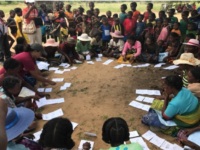
Cash transfers, recognized as one of the most effective tools in social protection, are expanding rapidly into the world’s poorest economies. As these programs support more of the world’s most vulnerable populations, they face growing demands to increase their effectiveness. Light touch interventions from behavioral science help make programs more adaptive to the psychological phenomena that influence beneficiaries’ decisions and actions and improve outcomes at little additional cost.
An Economic Reform Governance Model to reform design and delivery of citizen-and business-centric public services was introduced in 2016. Aim of the Model was to eliminate barriers, ensure transparency, develop digital public services and expand competitiveness through increasing engagement of civil society and businesses in the reform process. Implementing 136 reform initiatives by passing 55 legal acts enabled the government to create more favorable social-economic opportunities for citizens.
The Smart Cities Challenge is a competition open to local governments across Canada. Launched in 2017 as the federal government’s first prize-based funding program, it invites communities to solve problems and improve quality of life for residents by leveraging connected technologies and data. The Challenge incentivizes communities to approach problem-solving in creative ways by working with residents, building partnerships, experimenting and taking risks.
Koldchain is the world's lowest-cost, patent-pending, GAVI-endorsed, solution based on thermosensitive polymers that leave distinct patterns upon exposure to temperature shifts. These patterns are interpreted by our smartphone algorithm to detect whether temperature fluctuations have damaged vaccines or other sensitive maternal health biotech products, and thus prevent infant & maternal mortality. The same tech applies to dairy, meat, and many other products where temperature affects quality.
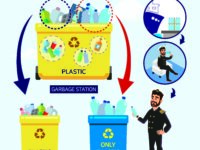
In cooperation with the Korean government, major companies, social enterprises, and international organizations, Ulsan Port Authority (UPA) has initiated a project of “upcycling plastic waste coming from ships,” aiming to solve harbor-specific ocean plastic pollution. The UPA has improved upon the policies on discharging plastic waste from ships and created an upcycled product using the plastic waste. The UPA’s practice has contributed to reduce ocean plastic pollution.
In order to respond to the surge in unprecedented pandemic of COVID-19, Korean government swiftly developed the Epidemiological Investigation System based on Smart City Data Hub technology. It is designed to help officials quickly trace transmission routes and places through real-time data analysis such as mobile information. This system reduced the time for investigation from 24 hours to less than 10 minutes, enabling the containment of the pandemic in early stage and effective quarantine.
The CXEC is a cohort program that brings together US Department of Agriculture (USDA) staff across America to learn about customer experience (CX) and develop new solutions to common CX issues faced by American farmers. In doing so, it creates a unique space for collaboration, knowledge-sharing, and the development of locally-informed solutions.
TrueMed will change the brand protection market with modern AI based software approach for detecting originals and counterfeits around the world. TrueMed’s innovation is the next generation method for rapidly detecting goods, at any point of distribution, by customs or even consumers. It can be used by brand owners and authorities in global and cross-border collaborations. It is 100% non-additive, hence very cost-effective, agile, and capable of being adopted to different use cases.
Bullying is one of the main social challenges in Lithuania with about 30% of children becoming victims of bullying few times a week. Most of them don’t report the incidents while school officials often can’t recognize and effectively provide help for both victims and bullies. “Patyčių dėžutė” is a mobile app which allows children to anonymously report bullying accidents, while REAGUOK.LT is a e-learning platform for teachers with all the relevant information about how to respond to…