
NATAL’s Helpline was developed 20 years ago to provide an accessible and destigmatized method for those traumatized by terror and war. The Helpline provides state-of-the art trauma-informed mental health care. Twelve years later, in partnership with Pastor Harris and his community, the model was adapted to help Chicagoans cope with trauma from urban violence. This international partnership trained 40 caregivers to help hundreds of callers annually, resulting in healthier outcomes and…
Case Study Library
Where innovations are collected and shared to disseminate and replicate good ideas

Innovations:
0
This website, as well as any data and map included herein, are without prejudice to the status of or sovereignty over any territory, to the delimitation of international frontiers and boundaries and to the name of any territory, city or area.

The GCF is the MMC’s response to the unmet needs of cities as they work to support migrants, refugees, & IDPs during COVID-19. By offering direct financial and technical support to cities in low & middle income countries, the GCF proves fiscal feasibility in places that are often disregarded by donors with low-risk tolerance. The vision is to create a model that can be scaled & replicated elsewhere to ensure that global responses to pressing challenges reflect & address realities on the…
Using AI algorithms and photographic images from school buildings in Nepal and Kyrgyzstan, two international public universities collaborated with a team from the World Bank to develop a technical solution to the long-standing problem of identifying the most vulnerable school building infrastructures in hard-to-reach areas of developing countries. With this solution, an estimated 875 million children and teachers at risk of being injured can be better protected from natural disaster harms.
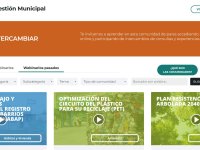
The Municipal Management Portal is an online platform for local government policy practitioners to learn and share expertise and build collaborative networks across Argentina and internationally. The Portal is innovative not only through new applications of technology but also because it reflects a new conceptual understanding of Argentinian local government as open, professionalised and dynamic.
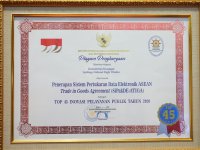
The Indonesian Government has initiated “I-Gateway” as Hub for ASEAN Trading Document, enabling electronic data exchange such as certificates of origin to ensure authenticity, reduce paper work and eliminates redundancy. I-Gateway connects both domestically among national agencies and internationally with other countries. It validates and reconciles documents efficiently, to ensure its security as well as business process simplification and harmonization, aiming to higher ease of doing…
Case Study
Barcelona Alumni: A digital science-policy nexus connecting international talent to local challenges

In 2020, Barcelona Alumni’s global virtual platform was launched to leverage the network of international talent educated in Barcelona but residing abroad and contribute to feeding scientific evidence into the local policy-making process. By connecting international experts and local challenges, this first-of-its-kind digital platform provides a pioneering approach to policy-making, making it more crowdsourced, evidence-based, replicable, scalable, accountable, and transparent.
Democratic Society have developed a prototype for a Democratic Climate Model to show the impact of putting citizen at the centre of local climate action. It responds to the gap in pan-European efforts to democratise climate action, providing terminology and models to shift cities from a solely technocratic to a democratic approach to climate resilience. It is evolving ‘climate democracy’ discourse with funders, public sector and civil society by scaling local initiatives to European…
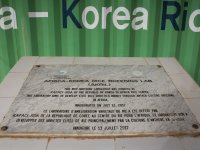
KAFACI and AfricaRice jointly developed the Africa Rice Development Partnership project to increase rice productivity in Africa. Using modern breeding technology that shortens the breeding period from 10-15 years to 3-5 years, and by crossing Korean Japonica rice with African varieties, five high-yielding varieties were developed and registered in three countries. The newly released varieties directly benefited farmers, consumers, retailers and policy-makers due to their high yield and quality.
The West Africa Health Informatics Team (WAHIT), based at the West African Health Organization (WAHO), is a team of software developers and health information system experts that provide on-demand technical assistance to countries while building local capacity. Originally founded in the wake of the Ebola outbreak as a proof of concept to test innovative models for building local health informatics capacity, WAHIT evolved into a foundational component of WAHO’s leadership in health in the…
Governments have increasingly adopted remote work due to COVID19. So far, there has been no comparative assessment of how teleworking has affected the public sector. The People in Government Lab, together with an international team of researchers from 12 universities is running a study in Brazil, Colombia, Chile, and the United Kingdom to understand the organisational advantages of teleworking, and to evaluate how behavioural sciences can improve public employees’ wellbeing and performance