

Good Coffee is a Vocational Engagement Enterprise that organises a chain of social cafes for people with complex psychosocial disabilities. The cafes provide vocational rehabilitation on a work place and for some, introductory training is already given during their hospitalization in Mental Health Centers. The model enables continuity of care and transition between the realms of Health, Social Services and Employment. Good Coffee also reduces public funding, increases independent living and…
Case Study Library
Where innovations are collected and shared to disseminate and replicate good ideas

Innovations:
0
This website, as well as any data and map included herein, are without prejudice to the status of or sovereignty over any territory, to the delimitation of international frontiers and boundaries and to the name of any territory, city or area.
The Health Affairs Department created an interactive map service to address the issue of patients and visitors getting lost in the hospital. The goal is to enhance their experience by providing accurate instructions and an interactive map. This innovation allows easy access to detailed maps, helping users find departments, facilities. It saves time, reduces frustration, and improves overall comfort. By utilizing technology, it offers a user-friendly experience, and enhances hospital management.
Young people struggle to navigate public services organized by sector. DigiUng is a collaborative government initiative coordinating youth-related public information and services in one joint digital ecosystem across sectors of society. The whole ecosystem is available from one place: ung.no, offering information and digital services tailored to the age and needs of its 60 000 daily users.
DigiUng has been a transformative initiative, opening a new realm of possibilities for the public sector.
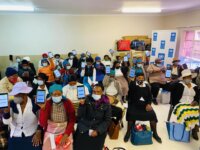
UNDP has introduced a digital system that allows better reporting of public health data in rural communities in Lesotho. It consists of tablets and software designed to fit the needs of Village Health Workers, the Ministry of Health unit that collects the data, whose staff has low digital literacy. The initiative led to increased reporting frequencies (essential for monitoring fast-moving epidemics) and reduced costs; as a side effect, it increased the rates of digital literacy of the personnel.
Case Study
Digitalized Real-Time Narcotics Vigilance: Agile Monitoring & Pre-notification Surveillance of…
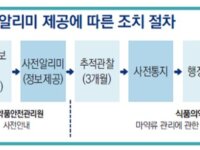
As the overuse and misuse of narcotics pose a global public health threat, the Korean governance has developed a smart, digitalized real-time monitoring system for narcotics safety management. By utilizing this state-of-the-art technology, the government can analyze prescriptions, track patterns, and alert doctors to prevent the overuse and misuse of narcotics.
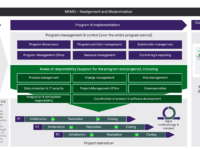
The NEMO program is a forward-thinking initiative reimagining Hamburg's public registry offices to meet future demands by integrating digital transformation with user-centric services. Developed in response to an urgent need for modern, efficient public services, the program orchestrates a holistic transformation by managing 16 interconnected projects aiming to digitize citizen interactions by including agile management, cross-sector collaboration, and advanced technology.
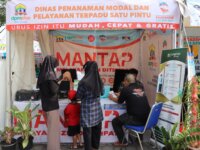
The investment and business sector in Serang City, especially for small-scale, is still facing licensing constraints. Easy Business License in One Step, comes as solution that allows business licensing and education services to the community, will be conducted at the village and sub-district, instead of having to go to the Investment and One-Stop Office. It will cut bureaucratic red tape so that people with time constraints, lack of understanding, and people with disabilities can be served.
People are demanding increased transparency and participation in government decision-making processes. Project Heart brought together people with lived experience, researchers, designers, and policy analysts to co-envision a way for engagement to be meaningful and bring about more caring and equitable futures for all. The findings are a rallying call for governments to change common practices and move towards co-designing policies/programs as a path to (re)building community relationships.
Statistics Poland has launched Public Services Monitoring System to provide local government units, entrepreneurs and community with the information necessary for a comprehensive assessment of services provided at the local level. Previously entities responsible for providing these services did not have access to data for supporting decision-making processes, as well as to monitor changes to improve the quality of services at the municipal level.
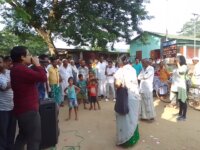
The Sewa Setu Portal is a transformative initiative by the Government of Assam that utilizes cutting-edge technology to revolutionize public service delivery. It addresses longstanding issues such as slow service, accessibility challenges, and bureaucratic delays, thereby enhancing efficiency, transparency, and accessibility for citizens and businesses. The project aims to offer over 1000 online services, including advanced features like automatic eligibility notifications and digital…