
In order to support the operation of certified cash registers, the Financial Administration (FA) launched a crowd-sourcing campaign in 2016 for the purpose of motivating consumers to receive an invoice, take it, check whether it is correct and send it to the FA. This way, every citizen was able to contribute crack down on invoice fraud and to reduce the shadow economy (which is the part of an economy involving goods and services which are paid for in cash, and therefore not declared for tax.)
Case Study Library
Where innovations are collected and shared to disseminate and replicate good ideas

Innovations:
0
This website, as well as any data and map included herein, are without prejudice to the status of or sovereignty over any territory, to the delimitation of international frontiers and boundaries and to the name of any territory, city or area.
MyInfo allows Singapore citizens to provide personal data, only once (if not already made available), instead of doing so for every government digital service. It aims to increase convenience and save time in digital transactions, while reducing cost by reducing hardcopy document verification.

Learning from the challenges of 2015 Nepal Earthquake where geo-spatial data was at a premium, Kathmandu Living Labs implemented a project that created a robust geo-spatial database for the entire Pokhara Lekhnath Metropolitan City. The ownership of this dataset was passed to the local government. The project opened the door for open mapping to be adopted by the government, engaged local citizens to map their neighbourhoods and encouraged local government to make use of spatial data.

The Provincial Council of Gipuzkoa presents the program entitled Etorkizuna Eraikiz (Building the Future) as an innovative program for a more open and collaborative governance. Etorkizuna Eraikiz incorporates public deliberation with the citizenship for the design of public policies, ensuring the effectiveness, efficiency and plurality of this participation. The program consists of an active experimentation exercise to develop the future of the territory.
The Government of Argentina is implementing transparency, participation and accountability in the judiciary through two flagship initiatives from the Ministry of Justice: Open Justice and Justice 2020. Open Justice is an open data portal, and Justice 2020 is a civic engagement platform. Through these initiatives, the government is seeking to improve the relationship between society and the justice sector as well as justice service delivery.
Case Study
CityScope FindingPlaces: HCI Platform for Public Participation in Refugees’ Accommodation Process

In reaction to the sudden arrival of tens of thousands of refugees to the city of Hamburg (DE), MIT and Hafen City University's City Science Lab created a public participation and decision-making process for refugee accommodation in Hamburg neighbourhoods. 'CityScope FindingPlaces', an Human Computer Interaction platform, was designed and deployed to facilitate dozens of community meetings with ~500 participants, resulting with 160 locations accepted by Hamburg’s citizens to be developed for…
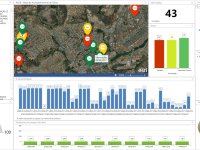
The Environmental Sanitation Company of the Federal District of Brazil uses of spatial intelligence to reduce water consumption, increase revenues and optimize process.
The Price Bank enables public procurement parties to have points of reference for price quotes for particular products, as it is a database of electronic invoices issues in Brazil. Participants narrow their search via descriptors and filters to find the right quote.
SPID (Sistema Pubblico di Identità Digitale, or Digital Identity System) is a solution for accessing public administration online services through once-only digital identity (user & password) generated by private Identity Providers. It can be used from any device (PC, tablet & smartphone) by citizens. SPID aims to improve the relationship between citizens & the public administration by expanding the digital approach in using public services.
SmartStart was the first cross-agency online life event service in New Zealand. SmartStart makes it easier for New Zealanders to access information and services around the birth of a child.
New Zealanders can:
1) learn about having a child;
2) navigate government services;
3) access and engage with services; and
4) consent to reuse information provided to one agency with another agency.