
Water networks are confronted with aging infrastructure, increased urban population, and climate change. The City of Greater Sudbury has collaborated with CANN Forecast to implement InteliPipes, an AI-based decision-support system that leverages various data sources to improve the overall reliability of its water network. With it the City can (a) understand better the network’s degradation over time, (b) tailor inspection plans and replacement programmes, and (c) optimise watermains…
Global: Artificial Intelligence
Case Study
School-Effect Indicator: An analysis of schools, using artificial intelligence, according to the…

The São Paulo State Court of Auditors built a new analysis methodology, the School-Effect Indicator (IEE), which includes factors such as the socioeconomic status of students in the evaluation of school effectiveness. Through Artificial Intelligence (AI), it is calculated how much the school has contributed to the competence of its students, highlighting the principle of equity, recognizing the needs of each school group and working to reduce the impact of differences.


In the face of what has increasingly been referred to as an ongoing “permacrisis”, governments must cope with and respond to emerging threats while already grappling with longstanding issues such as climate change, digital disruption and low levels of trust. Despite compounding challenges, governments have been able to adapt and innovate to transform their societies and economies, and to transform themselves and how they design and deliver policies and services. Indeed, recent crises have…
The provision of European funding for economic recovery after the pandemic favored the provision of significant aid to citizens that needed to be managed quickly to ensure financial sustainability. Previously, this was done manually, which caused difficulties in resolving them in due time and form. For this reason, the aid robotization process was implemented to speed up the procedures, releasing administrative burdens and responding to citizens' requests in an agile and efficient way.
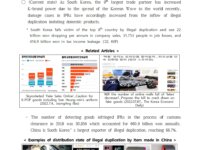
The project is subject to uncovering illegal duplication in advance from overseas inflow through the AI Reading System in the process of customs clearance cooperated with Korea Customs Service. No. of uncovering illegal duplication per annum exceeds 400,000 cases and the demand for AI system is high due to lacking manpower for customs inspection and the explosive increase in importing goods. This AI system has been developed from 2020, and proving its performance in two customs office in Korea.
The Center for Hybrid Intelligence (CHI) has with partners such as UN’s AI4Good and the Danish People Climate Summit piloted a new AI powered game, “Crea.visions,” which allows the general public to collaboratively create and reflect on images of possible futures. Such accessible crowdsourcing of the concerns and solutions of the general public on both global and local complex socio-scientific problems could form a cornerstone in participatory democracy in the digital age.

Public healthcare in Serbia is transformed through innovative use of mixed reality technology powered by Artificial Intelligence, that increased efficiency and quality of healthcare, minimized risks and efforts, and optimizes procedures. Through remote collaboration, doctors have the same insight into patient’s condition without the need of physical presence, enabling joint real time inputs and medical interventions with experts from anywhere, as well as remote education for medical students.
Case Study
Driving Artificial Intelligence in Public Services through accredited upskilling and project…
The Foundation Certificate in AI project seeks to make Ireland a world-leader in the ethical application of Artificial Intelligence across the Irish civil and public services by 2030 and is in line with the digital ambition, which the government of Ireland set itself. The project aims to upskill/reskill Irish Civil & Public Servants, identify a pipeline of potential AI projects that can improve service delivery, deliver value for money and is aligned National Strategy in AI & Innovation.