Skip to content
An official website of the OECD. Find out more
Created by the Public Governance Directorate

This website was created by the OECD Observatory of Public Sector Innovation (OPSI), part of the OECD Public Governance Directorate (GOV).

How to validate authenticity

Validation that this is an official OECD website can be found on the Innovative Government page of the corporate OECD website.

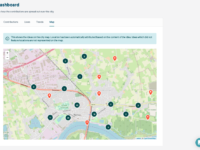
In citizen participation projects, analysing contributions is often a huge challenge for administrations. CitizenLab has developed machine-learning algorithms in order to help civil servants easily process thousands of citizen contributions and efficiently use these insights in decision-making. The dashboards on our platform classify ideas, show what topics are emerging, summarise trends and cluster similar contributions by theme, demographic trait or location.
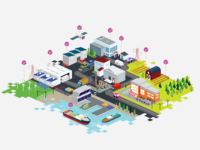
The Artech project invites artists, entrepreneurs, and developers to use public data as a "raw material" for works of art based on traditional arts or digital media. Being a well-known and respectable medium to broad audiences, we see art, as an original and fresh way to expose new audiences to the importance of open data and its relevance. This is the first time that a government agency in Israel has directly sponsored a creative and innovative experience of this kind.
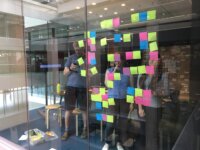
The European Commission led #Blockchain4EU as a forward-looking exploration of existing, emerging and potential Blockchain and other DLTs (Distributed Ledger Technologies) applications for industrial sectors. Through an experimental and participatory approach, this project allowed first to come up with an overview of promising applications across industries, and second to co-design five prototypes that physically showcase how Blockchain could be applied in the near future.
Innovative use of social media (Whatsapp) platform to increase participation and disseminate information for the creation of Paraguay's 4th National Action Open-Government Plan. These 14 online groups were created to allow citizens from the countryside, from marginalized and vulnerable groups, to be able to participate on an equal standing with other citizens from urban areas with access to policyholders. It is innovative because it was the first time we used this platform to involve citizens.
HubGov is an interinstitutional program of innovation in Government that has the participation of institution from the three spheres and three powers. Through a learning trail in innovation and intrapreneurship skills, each institution comes up with a complex challenge and at the end of the program presents a solution proposal to this challenge.
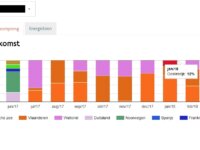
The energy regulator of Flanders, Belgium, has launched a new interactive online tool, ‘GreenCheck 2.0’, allowing each citizen and company to check the characteristics of the electricity supplied to their home, such as the percentage of renewables, the country of origin and the energy source. This way, the government caters to the increasing demand for green contracts, the need for transparency from suppliers and the government, while overall empowering the liberalization of the energy…
The Canada Learning Bond, a government education savings program providing a financial incentive to low income Canadians, turned to behavioural insights (BI) to tackle persistent low take-up. Following unsuccessful BI trials based on academic literature and expertise, we turned to Design. In a Government of Canada first, combining lessons learned from human centred design processes including stories from citizens and BI we developed outreach that significantly improved the take-up of the Bond.
The Government Digital Service and the Ministry of Housing, Communities and Local Government launched the Local Digital Declaration to support and unite local authorities around a shared understanding of good digital practice. It is a unique call to action that addresses the legacy IT contracts, isolation of procurement practices and siloed digital projects that have left local government services vulnerable to high delivery costs and low customer satisfaction for the public they serve.
Every week millions of people use the UK government's GOV.UK website to do complex and sometimes life-changing tasks, such as learning to drive, getting a visa, or starting a business. In the past, finding the guidance, forms and online services you needed could be difficult and time-consuming. Step-by-step navigation is a new feature on GOV.UK that allows any service to be represented as a series of simple steps.
With the drafting of its first Constitution, Mexico City had a great opportunity: to explore innovative ways of crowd-sourcing this historic document, setting an example to other cities in the world on how to design important democratic experimentation at the scale of a megalopolis. The result of the entire Constitutional process is a forward-thinking document with progressive social policy and human rights at its heart. It became a legal reality in September 2018.