
Employment and Social Development Canada (ESDC) led the design and implementation of a national poverty reduction strategy public engagement process. We offered Canadians multiple ways to share their views, from public town hall events to online discussions, to a youth contest, to an in-depth research project. The engagement process successfully reached thousands of Canadians in a short time frame on a low budget. The plan is now used as a Government of Canada model for effective civic…
Innovation Tag: People Networks/Communities of Practice
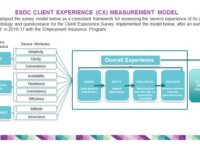
The Client Experience Measurement Survey Model was developed by Employment and Social Development Canada to gather and analyse client feedback to improve service delivery to its clients. Canadians have been able to express their views on government programs and services, which have informed the way programs and services are designed and delivered. The survey allows the tracking of service satisfaction, ease of access, effectiveness of service delivery, and the experience of particular programs…
Originally conceived as a planning tool, HeritageMaps.ie is a user-driven, web-based mapviewer focusing on the built, cultural and natural heritage around Ireland and offshore. Its potential for use by the general public was quickly realised and users can now access 700+ up-to-date heritage datasets in map-form, originally provided across many Govt. platforms. HeritageMaps.ie a free ‘one-stop-shop’ for heritage data and acts as a discovery portal, providing direct links to promote research.
BPA or technology-enabled automation of rules based business processes was identified as an opportunity to streamline the operational business of the Organisation, to achieve simplicity, improve service delivery and reduce costs. The innovation engages BPA to digitally transform workflows from conventional data manipulation and record-keeping functions, to efficient automated systems. BPA has benefitted front line staff, where the burden of processes has transferred from humans to technology.
Les Halles Civiques is a third-place network that gathers organisations working on citizen empowerment, public innovation, and democratic progress. Its members are researchers, designers, social innovators, entrepreneurs, etc. It aims to contribute to a richer and more inventive democratic life at the local, national and international level, and strengthen democratic innovation. It is also a physical space where citizens, professionals and representatives can work, meet and discuss.

HubGov is an interinstitutional program of innovation in Government that has the participation of institution from the three spheres and three powers. Through a learning trail in innovation and intrapreneurship skills, each institution comes up with a complex challenge and at the end of the program presents a solution proposal to this challenge.
Experimentation Works (EW) is a Government-of-Canada initiative to build public servants’ capacity in experimentation skills and practice through a learning-by-doing model that supports and showcases 5 small-scale experiments in the open. EW seeks to generate practical examples of experiments and ensure open access to learning materials, progress updates and results for broad impact. It works by connecting project teams with each other, and with experts in a open-by-default “cohort model."
The Government Digital Service and the Ministry of Housing, Communities and Local Government launched the Local Digital Declaration to support and unite local authorities around a shared understanding of good digital practice.
It is a unique call to action that addresses the legacy IT contracts, isolation of procurement practices and siloed digital projects that have left local government services vulnerable to high delivery costs and low customer satisfaction for the public they serve.
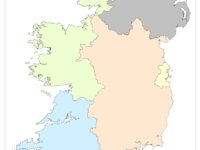
Climate change requires comprehensive responses at local and regional level which makes local government critical to the delivery of national and international policies. The establishment of four Climate Action Regional Offices (CAROs) as Centres of Excellence based on distinct geographic/topographic characteristics enables them to advise local authorities in their region on climate action strategies ensuring a coordinated response and assisting with the roll-out of national/regional policies at…
With the drafting of its first Constitution, Mexico City had a great opportunity: to explore innovative ways of crowd-sourcing this historic document, setting an example to other cities in the world on how to design important democratic experimentation at the scale of a megalopolis. The result of the entire Constitutional process is a forward-thinking document with progressive social policy and human rights at its heart. It became a legal reality in September 2018.