
Governments often struggle to decide which emerging technologies are worth adopting and how to apply them responsibly. The Future Technology Observatory helps government entities identify, assess, and test high-potential technologies before adoption. It is innovative because it connects technology foresight with practical experimentation and adoption guidance in one shared government capability.
Innovation Tag: Public Service Delivery
Case Study
FCINCO Anti-Sludge: a systematic method to identify and remove behavioural barriers in digital…
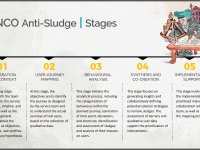
Digital public services often fail not only due to lack of provision, but because of invisible barriers that hinder or even prevent citizens from accessing and interacting with government in digital environments.
The FCINCO Anti-Sludge method systematically identifies and removes these barriers. Applied in real services, it can improve access, reduce friction, and increase the efficiency of public service delivery.
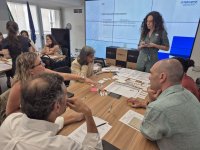
The Matrix gives public organisations a data‑driven understanding of how their services work for people. By combining user experience, operational and regulatory data, it exposes the areas where improvements matter most. It then guides teams to act on that evidence, helping create more effective and responsive public services
Case Study
Shared Services Center “ColaboraGov”: An Innovative Model for Delivering Administrative Services…
In order to enable strategic ministerial expansion without increasing costs, ColaboraGov centralizes the sharing of administrative support services among 13 ministries. It ensures savings in resources, gains in scale and quality, and standardized service provision. It comprises more than 41,000 civil servants, 374 services and has an impact on 10 areas - such as human resources, finance and logistics - thus making it easier for the government to direct its efforts towards final public policies.

Digital Transformation Co-Creation Platform enables national and local governments to co-create policies and services through knowledge sharing and mutual learning. In Japan, diverse knowledge and challenges exist across about 1,780 local governments but are not adequately shared due to hierarchical communication structures. Digital Agency has developed a co-creation ecosystem where government officers nationwide can engage in open, flat, and two-way communications as individuals.

Wildfires is one of the main causes of blackouts in Brazil. To monitor the thousands of Brazilian Transmission Lines (TLs), ANEEL created the GGT System, which consists of a tool that uses Artificial Intelligence and satellite images processing to preventively inspect the maintenance of TLs against wildfires. With the GGT System, there was a 89% reduction in shutdowns caused by wildfires, representing a great improvement in the reliability of the electricity offered to the Brazilian population.
The project proposes a system for extracting and analysing information from the medical records of breast cancer patients, using artificial intelligence. This would support research, personalised medicine and health decision-making, benefiting clinicians and regional authorities. This provides an automated alternative to accelerate translational research, promote personalised medicine and improve the efficiency of health services.

Incheon City initiated a demonstration project utilizing AI technology to assist tourists and multicultural citizens in effectively communicating their symptoms to healthcare professionals. Mediark Inc. was chosen for this project through a public tender. The city supports the AI technology's development and demonstration costs, collaborating with Mediark Inc., the Incheon Medical Association, and the Pharmaceutical Association. Mediark Inc. introduced the SIMTOMI app in November 2023.
Social Security is now proactively sending communication of the proposal to award the Family Allowance, as soon as the baby is registered at the maternity hospital. All the father or mother has to do is go to their Social Security Direct message area and confirm the proposal. With this confirmation, the Family Allowance is automatically awarded and no further action is required.

The UNDP in Ukraine training on a human rights-based approach in public policy design helped public servants who are involved in the digitalisation sphere learn how to develop state policies and electronic services based on principles of human rights and gender mainstreaming. It helped them dispel myths and learn the basic requirements, which resulted in more inclusive public services developed for Ukrainian citizens.