
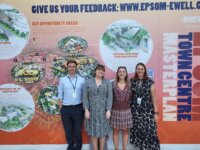
The PropTech Engagement Fund was launched in 2021 and has worked with 41 Local Authorities to date on accelerating the adoption of digital citizen engagement tools and transforming community involvement in placemaking. Our ongoing programme is the largest UK Government PropTech Programme, leading on how to work with industry, tech start ups and local governments to increase the diversity and positivity of placemaking conversations and to fast track new digital policy and local housing delivery.
Innovation Tag: UX/UI Design
The Smart Station project for future urban subway station has accelerated the digital transformation for public transportation industry, which has been slow to change, by applying fourth industrial technologies such as IoT, 3D digital twin technology, AI image analysis, and deep learning technology. Through this, the station has secured a control tower that can manage all lines for safe subway station operation, station workers can innovate their work through augmented reality UI systems.
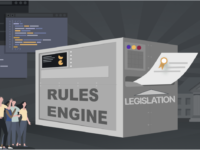
The Australian Government - Dept of Finance sponsored a Proof of Concept (PoC) that looked at how Rules as Code (RaC) might be provided as a shared utility that can be used to deliver simpler, personalised digital user journeys for citizens. RaC is the process of taking legislation and regulations and turning them into machine-readable code. It provides many benefits to citizens and government, including greater reuse, less duplication, greater transparency and accessibility of rules.

Less than 5% of Small Business (SBs) in Australia take out formal intellectual property protection, with many small business owners putting themselves at risk due to a lack of awareness about the need for Intellectual Property, especially at the point of establishing their business. TM Embed aims to engage these small businesses at critical points of their business journey by building awareness, educating them about trade marks, and simplifying the way in which they engage with the trade ma
Aviation is regulated in a vast set of laws and agreements, on an international and national level and is to be respected by aviators of all sizes; from big national airports, till little children playing with drones. All these different rules and moreover national differences lead to an incredibly complex system to implement. The Belgian Federal Public Service Mobility has developed a system that translates these legal requirements into a single online aircraft registration platform.
Using AI algorithms and photographic images from school buildings in Nepal and Kyrgyzstan, two international public universities collaborated with a team from the World Bank to develop a technical solution to the long-standing problem of identifying the most vulnerable school building infrastructures in hard-to-reach areas of developing countries. With this solution, an estimated 875 million children and teachers at risk of being injured can be better protected from natural disaster harms.
Mi Taxi, My Cab, part of Mexico City’s App, was created to boost trust in the public cab network by making the service safer. It provides information about the drivers and the cabs' public concessions. Users can rate the trip and activate a panic button connected to the City’s Intelligence Agency, C5.
Negative perceptions of safety among the public lead the Government to grasp the situation faced by drivers and users, particularly women, and thus developed the initial phase of the app,…
Case Study
Nudging Mexico City drivers into feeling co-responsible for everyone’s safety: a new license…
Taking a course and a comprehensive driving test has not been a mandatory requirement to issue a driver's license in Mexico City and implementing such a system is not simple. The City is building institutional capabilities to effectively implement mandatory courses and tests to improve road safety. Meanwhile, SEMOVI has modified the issuing license form to nudge applicants into feeling co-responsible for road safety and refraining from driving if they deem themselves incapable of doing it…
Case Study
Fotocívicas: Changing Fines for Community Work and Educational Penalties to Improve Drivers’…
Fotocívicas is a behaviourally inspired traffic control system that relies on educational and civic fines aiming to transform drivers’ behaviour by reducing recidivism and licensing effect among offenders. It sets out to change the previous system, which was based on monetary fines with cameras placed where drivers were more prone to speed, not where more fatalities happened, without improving behaviours or road safety
New Zealand has developed the Emergency Caller Location Information (ECLI) Service. The Service enables Public Safety Organisations (PSOs) to receive automatically generated geographical information about the location of a caller when an emergency call is connected to a mobile cellular network, from any mobile device. ECLI saves lives by decreasing the time taken to verify location and reduce the average dispatch time to incidents, with controls in place to protect callers’ personal…