
The Government Digital Service and the Ministry of Housing, Communities and Local Government launched the Local Digital Declaration to support and unite local authorities around a shared understanding of good digital practice.
It is a unique call to action that addresses the legacy IT contracts, isolation of procurement practices and siloed digital projects that have left local government services vulnerable to high delivery costs and low customer satisfaction for the public they serve.
Innovation Tag: UX/UI Design
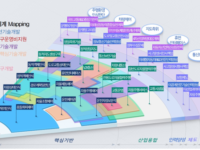
The Government of Korea is beginning to implement a new innovation investment model, 'R&D PIE', which leverages big data analytics and machine learning in order to assess disruptive changes in the technology landscape, and to identify overlaps and potential opportunities across the Korean ministries. Through this, the government has a way of identifying missing links in the innovation initiatives, fostering collaboration among agencies, universities, and companies, and solving social problems.

Many years of Australian debate and public division around same sex marriage culminated in a single, nation-wide postal survey. The Australian Bureau of Statistics was given only 99 days to prepare, conduct and release the results of a survey of Australia’s 16 million enrolled voters. An amazing 80% of citizens participated in this voluntary survey, enabled by innovative project management and customer-centric service delivery. The project was delivered for 2/3 of its budget, a $40m saving.
Social innovations offer many new solutions to today’s challenges. Yet, they encounter difficulties in becoming known. Social innovation Crossroad offers a precise vision of social innovations in France. To do so, a search engine gives access to 5000 projects already capitalized by 50 actors. Financers, coaches, academics and projects holders now get reliable information, automatically up-to-date and enter a new community. Small as well as big projects are highlighted the same way.
The Citizen Calendar is an online cross-cutting app that stands as the single point of information about all major events and interactions with the Public Administration. Through a secure digital authentication of their choice, citizens can view, edit and customize events of interest, such as the payment of benefits, fiscal calendars, health appointments, and so on.
Over a third of U.S. federal employees are eligible to retire in the next five years, yet only 6% of employees are under 30—a pressing issue given the rate of innovation. Piloted as an effort between agencies and a student-led nonprofit, the Civic Digital Fellowship recruits the next generation of technologists—students and recent grads—pairing them with in-need agencies. It has scaled to six agencies, and is an attractive on-ramp for technical students into public service.
The General Data Protection Regulation (GDPR) requires that organisations carry outData Protection Impact Assessments (DPIA or PIA) prior to starting a likely risky processing operation. The PIA tool is a free and open source software tool, available as a standalone and “server” version. It helps organisations to conduct PIAs by guiding them through the process step-by-step, and thus to demonstrate compliance with the GDPR.

ProZorro.Sale is an electronic auction system aimed at transparent sales of state and local government assets. It involves a central database that conducts auctions and stores all the information about the transaction and commercial platforms connected to the database via Application Programming Interface (API). After the transaction all the information becomes public.
Case Study
CityScope FindingPlaces: HCI Platform for Public Participation in Refugees’ Accommodation Process

In reaction to the sudden arrival of tens of thousands of refugees to the city of Hamburg (DE), MIT and Hafen City University's City Science Lab created a public participation and decision-making process for refugee accommodation in Hamburg neighbourhoods. 'CityScope FindingPlaces', an Human Computer Interaction platform, was designed and deployed to facilitate dozens of community meetings with ~500 participants, resulting with 160 locations accepted by Hamburg’s citizens to be developed for…
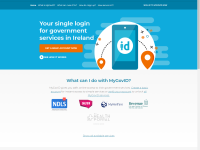
In meeting our own online identity and access management requirements the Department developed MyGovID as a single online account for all government bodies in Ireland.
The innovation was in building a trust framework that provides a high level of assurance to government agencies. Customers accessing online services only have to sign up once.
MyGovID was developed as a responsive user experience using a cloud based identity and access management service.