
Complex government documents may confuse citizens, making it difficult to access services such as pensions or benefits. This work engages GenAI to rewrite these texts in plain language, maintaining legal accuracy while increasing clarity. Focused on the Service Pages of Italy's National Institute of Social Security portal, which serves 45 million users, AI surpassed human experts in user preference, enabling the Institute to communicate inclusively and at scale.
Case Study Library
Where innovations are collected and shared to disseminate and replicate good ideas

Innovations:
0
This website, as well as any data and map included herein, are without prejudice to the status of or sovereignty over any territory, to the delimitation of international frontiers and boundaries and to the name of any territory, city or area.
The study integrates Artificial Intelligence (AI) techniques, and a digital twin methodology to process and interpret urban data streams derived from citizen interactions with the city's coordinate-based problem mapping platform. Using an interactive GeoDataFrame within the digital twin methodology, dynamic entities facilitate simulations based on various scenarios, allowing users to visualize, analyze, and predict the response of the urban system at
Case Study
Thematic Innovation Clinic to improve the quality and quantity of public service innovations
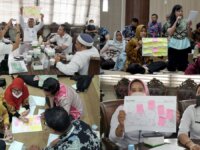
Thematic Innovation Clinic was implemented to encourage and increase number and quality of innovations in Pontianak City. This program succeeded in increasing the number of innovations within the Pontianak City Government to 165 innovations in 2022, and to 196 innovations in 2023. With a design thinking approach, the innovation clinic increases the number of innovations, fosters the spirit and culture of innovation, and cross-party collaboration to deliver optimal public services to community.
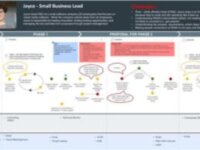
In the U.S. government, community members have experimented with designing the government services they will use. Their lived experience improves service outcomes, builds better relations with the government, and creates greater ownership over the service. This is new; normal participatory design of government services just includes community members for certain activities at certain points, never throughout, and never allowing the community to lead and frame the project or choose methodologies.

Zaragoza City Council has launched a new electronic citizen participation platform with the aim of involving its citizens in public policy decisions and in the design of its services. It provides an interactive space for residents to actively contribute, strengthening the collaboration between the administration and the community, thus fostering a more inclusive and transparent management.
The National Injury Insurance Agency Queensland in partnership with Queensland University of Technology is revolutionising support for those severely injured in accidents by offering a digital platform for easier access to services and self-management. This initiative provides a seamless, empowering user experience, enhancing independence and trust in public support systems. It's innovative because it transforms traditional, paper-based processes into an accessible, efficient digital solution.
Karolinska University Hospital is piloting a new model for nurse-led innovation. The model consists of a framework for enabling nursing organisations to work with innovation and a nurse-led innovation hub concept, where nurses can collaborate with the industry to co-develop solutions for healthcare. Through this, the hospital puts nurses in the driving seat of innovation in healthcare to both develop better solutions for healthcare and promote a sustainable work life for frontline staff.
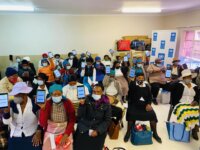
UNDP has introduced a digital system that allows better reporting of public health data in rural communities in Lesotho. It consists of tablets and software designed to fit the needs of Village Health Workers, the Ministry of Health unit that collects the data, whose staff has low digital literacy. The initiative led to increased reporting frequencies (essential for monitoring fast-moving epidemics) and reduced costs; as a side effect, it increased the rates of digital literacy of the personnel.
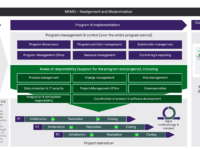
The NEMO program is a forward-thinking initiative reimagining Hamburg's public registry offices to meet future demands by integrating digital transformation with user-centric services. Developed in response to an urgent need for modern, efficient public services, the program orchestrates a holistic transformation by managing 16 interconnected projects aiming to digitize citizen interactions by including agile management, cross-sector collaboration, and advanced technology.
People are demanding increased transparency and participation in government decision-making processes. Project Heart brought together people with lived experience, researchers, designers, and policy analysts to co-envision a way for engagement to be meaningful and bring about more caring and equitable futures for all. The findings are a rallying call for governments to change common practices and move towards co-designing policies/programs as a path to (re)building community relationships.