

The City of Paris aims to reduce its public lighting energy consumption by 30% by 2020. Paris has made a smart city-ready lighting grid covering the entire city. This helps minimize its lighting system’s environmental impact and improve citizens’ public safety and user experience. It can be used to easily scale its service area to connect future smart services.
Case Study Library
Where innovations are collected and shared to disseminate and replicate good ideas

Innovations:
0
This website, as well as any data and map included herein, are without prejudice to the status of or sovereignty over any territory, to the delimitation of international frontiers and boundaries and to the name of any territory, city or area.
Korean government has been calling for the innovation of education and training system to narrow the gap between school education and employers’ requirements and to address the high youth unemployment rate issue.
The Ministry of Employment and Labor and the Human Resources Development Service of Korea introduced the Work-Learning Dual System in 2013.
It was adopted to get rid of mismatches between school education and workplaces based on the National Competency Standards led by companies.
The establishment of the Civil Service Management Board (CSMB) was a pivotal step in setting the future direction of strategic leadership in the Irish civil service. The CSMB enabled all Secretaries General/Heads of Offices, for the first time, to meet collectively to have strategic discussions on issues affecting all Government Departments and Offices. The CSMB implements the Civil Service Renewal Plan (CSRP), which seeks to tackle the biggest challenges facing the Irish civil service.
The service concept is based on findings in two previous studies in the field of social housing conducted in Sarpsborg: The findings showed that our municipal services were fragmented and complex. But, they also showed that the number of homeless in Sarpsborg was lower than the average on a regional and national scale.
Housing conditions are of importance for people’s lives, health development. We decided to do more of what we did well, and improve it. This brought about the project Way Home.
For the purpose of earthquake disaster management (preparedness, response, recovery) a comprehensive web-based modelling toolbox was developed enabling earthquake hazard simulation with selectable epicentre and intensity, affecting real housing stock in Slovenia, modelling its seismic resistance and related people occupancy. This is now enabling development of significantly improved preparedness and response mechanisms, initiating through the public awareness campaign also refurbishing process.
The reason for the development and launch of our e-solutions was to facilitate the collection of initiatives and proposals to eliminate administrative burdens and review their implementation in one place.
Our innovation provides users with an on-line one-stop-shop solution, where they receive all information about activities in eliminating administrative burdens and preparing better legislation, and enables systematic collection, resolution and monitoring of implementation of proposals.
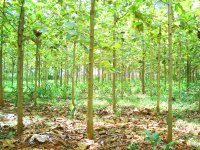
Two decades ago, 80% of Indonesia’s timber exports consisted of illegally-sourced wood. In order to combat this problem and to promote more sustainable forest management, the Government of Indonesia developed an innovative multi-stakeholder approach to ensure that wood products and raw materials would only be obtained or come from sources whose origins and management were legal and sustainable. Thus, the Timber Legality Assurance System (Sistem Verifikasi Legalitas Kayu – SVLK) was born.

FÉILTE (Festival of Education in Learning and Teaching Excellence) was developed because teachers are innovating and wish to share their learning. But teaching has been an isolated profession. Research indicates that we are not good at sharing learning across the public sector.
FÉILTE is a celebration of teaching and learning by teachers for teachers, students and parents. FÉILTE shares teaching so as to connect learning.
As part of the strategy about bringing schools into the digital era, 72 middle schools (pupils from age 11 to 15 years) have been selected to receive support for integrating digital technology into their teaching and the school administration. These 72 pilot “collèges connectés” are meant to be innovation and change leaders.
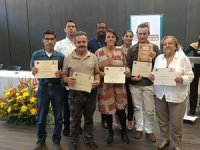
In a context where the channels between institutions and citizens have been broken by corruption, Día Blanco [White Day] is developed to promote bonds of trust and legitimacy among communities. In the last 3 years, more than 35,000 citizens have been mobilized by this innovative experience, which helps social organizations to inform their communities about their management and impact on local development through social accountability exercises.