
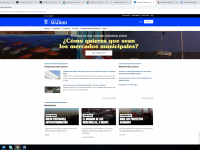
Decide Madrid is an online platform for public participation in decision-making, launched by the Madrid city council. The platform is designed for citizens to voice their concerns and participate through the development of proposals, votes for new local laws, debates, participatory budgeting and consultations.
Case Study Library
Where innovations are collected and shared to disseminate and replicate good ideas

Innovations:
0
This website, as well as any data and map included herein, are without prejudice to the status of or sovereignty over any territory, to the delimitation of international frontiers and boundaries and to the name of any territory, city or area.

A collaboration between government and community, Systemic Design eXchange (SDX) is an Edmonton-based community of practice for people interested in learning about systemic design as a methodology for addressing complex, real world issues. Together, we explore systems thinking, design thinking, and change lab approaches. With a bias towards learning by doing, SDX aims to be a watering hole where multiple sectors can come together, learn together, and act together.
The Korean government has implemented a program dubbed the One-stop Customized Lifecycle Services (OCLS) for heirs and expectant mothers, which was created by integrating existing services. With the OCLS in place, people no longer have to visit multiple government offices and they can take care of various issues at once. The government has also benefited from reduced costs and plans to emulate this success in other areas.

The National Secretariat of Technical Planning in Paraguay created the first National Volunteer Program Arovia, a public volunteer platform that promotes increased access to information on public services and opportunities for the implementation of grassroots projects that strengthens citizen participation and local governments structures. Arovia volunteers are young professionals who bring innovative social interventions to territories prioritized within the national poverty reduction strategy.

The State Environmental Service of the Republic of Latvia has invented mobile application for reporting environmental violations. The purpose of this app is to increase awareness on environmental problems and make reporting much easier for society. Users can apply environmental complains using mobile application and keep tracking solution of the problem.
The Personal Micro Credit (PMC) initiative aims to move people who cannot access mainstream credit away from high cost moneylenders, by providing an alternative, legitimate, low cost personal loan scheme, delivered through the nationwide network of credit unions. Innovation stems from a multi stakeholder approach (government, agencies, regulatory and the social economy). PMC offers a path to those excluded from affordable credit to ‘graduate’ to having access to mainstream financial…
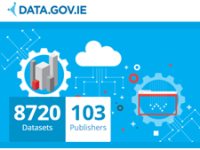
Ireland’s Open Data Initiative (ODI) is a key element of the government’s Public Service Reform activities. It aims to increase transparency, stimulate new business, build trust in Government and improve the lives of citizens by delivering better services. The ODI involves significant engagement with citizens, business, the data community, researchers and public bodies. Over 8700 datasets from 100 publishers are available on the ODI Portal which provides free access to data via a central…
The Digital Mobile Key is the Portuguese mobile eID solution, for secure authentication in public & private websites.
Instead of relying on different usernames/passwords for each entity, or using their eID Card, citizens now use the Digital Mobile Key, made of a single 4 digits PIN + an OTP(by SMS, email or messaging platform), or a push notification (Digital Mobile Key app)
In addition to authentication, Digital Mobile Key also allows digital signatures, both in a personal or a professional…
Case Study
National digital Identity and legally binding e-signatures based on Mobile-ID technology branded…
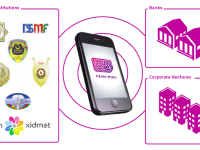
Asan Imza is the world’s fastest growing national digital identity in the form of Mobile-ID, which is secure, trusted and issued by the government of Azerbaijan. Based on PKI (a public key infrastructure) it is an irreplaceable tool empowering across all sectors, from public to private, including financial institutions and Mobile Network Operators, allowing to digitally verify your identity and create signatures equal to handwritten counterparts, regulated by law.
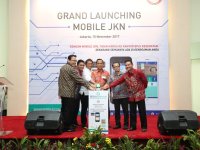
BPJS Kesehatan is the largest health insurance provider in the world, serving 201 million people in 2018 (80% of Indonesia’s population). In January 2014, BPJS Kesehatan transformed from a state-owned company (PT Askes) with 16 million members into a service suddenly responsible for 121 million people. BPJS Kesehatan has over 7,000 employees, yet this is still not enough to serve the huge number of people requiring their services. This led to the innovation of creating a mobile application.