
Finland’s Ministry of Finance set a target for all public services to be available digitally by 2023 as part of its Program for Promotion of Digitalisation. The 'Co-designing future digital services' project is a new way of providing free expert mentoring for public sector organisations in developing their digital services, with an emphasis on collaborative learning. The aim of the project is to ensure that future digital services are designed to be human-centered and of high quality.
Case Study Library
Where innovations are collected and shared to disseminate and replicate good ideas

Innovations:
0
This website, as well as any data and map included herein, are without prejudice to the status of or sovereignty over any territory, to the delimitation of international frontiers and boundaries and to the name of any territory, city or area.
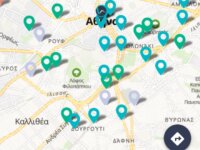
The "EXTREMA Global" application aims at the personalized risk assessment of thermal stresses. Specifically, it is a smartphone application that uses weather data for a specific geographic location and provides personalized information to city residents and visitors about heat-related health threats. Athens was the first city in Greece to use this application.
Case Study
Innovation Zones, Facets and Beyond – LIEPT (Lund Innovation Ecosystem Portfolio Tracking)…
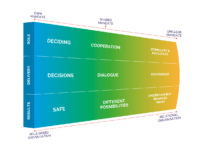
To provide a systematic approach for initiating and tracking collaborative development processes over time and inform investment decisions in multi-stakeholder environments, Future by Lund (FBL) has implemented a new model for innovation ecosystem portfolio tracking (LIEPT). The model benefits partnering stakeholders by building strategic competence for scaling solutions and working with innovation portfolios as an approach for governing and developing the ecosystem’s priority areas.

South Korea’s National Ombudsman Institution, Anti-Corruption and Civil Rights Commission (ACRC) is the only public agency in the country that handles all civil collective complaints against governments. ACRC’s collective complaint resolution effectively coordinates and mediates complicate large-scale complaints and suggests alternatives agreed by all parties. The system protects citizens from the infringement of rights and interests and prevents the occurrence of social conflicts.
The Valenzuela City Social Welfare and Development Office (CSWDO) participated in the 13-week accelerator programme. The The accelerator is a 13-week innovation programme. The programme took the staff from CSWDO who needed to support individuals in crisis situations. They addressed the problems and applied innovation methodologies to create solutions that work. The programme targeted root-cause problems, facilitated collaboration, and upskilled participants – driving better outcomes.
IQed (Inquiries/Questions in education) utilizes cutting-edge Democratic Technology in classrooms for the purpose of empowering students and educators in Digital Literacy, Civic Literacy, Dynamic Engagement, Critical Thinking/Problem-Solving Skills and Global Competency Education. IQed enables every student to use their personal devices to explore, investigate and become informed on issues of governance and global matters, so that their voice can positively impact local and global communities.
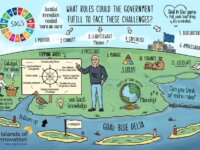
Together with partners from 5 other European countries, the Province of Fryslân developed an innovation model (so-called Tipping Approach) to catalyse and stimulate bottom-up innovations and harness ideas from local stakeholders. Complementing this, a governance model is being developed to provide civil servants with tools to implement these innovations in the social process in a simple and user-friendly way.
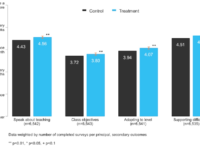
Providing school principals with simple rules of thumb improves school management practices and support to teachers in cost-effective and scalable ways. Evidence from an impact evaluation by the Ministry of Education in Guatemala and the Behavioural Insights Team showed that, an intervention inspired by the behavioural science literature, increased the frequency and quality of school management practices by principals and the satisfaction of teachers in Guatemala.
The AJSC has developed a new model to measure the determinants of the ‘quality of life’ in Ajman, covering six key areas of public service. The Model comprises a comprehensive factor measurement framework embedded on a sophisticated web-based application, with inbuilt protocols for scientific data collection, project management, data visualization and reporting. It systematically measures gaps and impact of interventions, via targeted performance assessment of framework factors.
The reason for creation was to improve inspection models of external control, which were based mainly on legality and conformity. IEG-M index is an instrument for measuring public area effectiveness, as it analyses the inputs, resources and processes of the local administration, evaluating its policies and activities. There are many finalistic results indexes, but none of them deals with the evaluation of processes to analyse the application of public money that impacts local communities.