
Skip to content
An official website of the OECD. Find out more
Created by the Public Governance Directorate

This website was created by the OECD Observatory of Public Sector Innovation (OPSI), part of the OECD Public Governance Directorate (GOV).

How to validate authenticity

Validation that this is an official OECD website can be found on the Innovative Government page of the corporate OECD website.

View as: Map

Filter by:

Countries

Level of government

Sector

Year of launch

Stage of innovation

Recognition

Innovation Tags

Innovations:
0
This website, as well as any data and map included herein, are without prejudice to the status of or sovereignty over any territory, to the delimitation of international frontiers and boundaries and to the name of any territory, city or area.
Lisbon Municipality aims for more innovation and sustainability in Public Procurement. Urgency and specifications' complexity are excuses for not considering sustainability in tenders and barriers to attracting innovative SMEs and startups. The innovative approach involved users designing and developing the Procurement Planning Platform, using a rapid development tool, cloud-based, and agile methods, which selects and supports a project-led approach for deploying new procurement strategies.
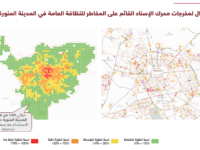
Nova Scotia has 21 Community Transportation Operators serving mainly vulnerable populations in rural areas. The CTOs were unable to feasibly procure a common dispatch and scheduling solution that met their needs, leaving them with inefficiencies and inability to meet growing needs. The Outpost for Public Sector Innovation designed a new approach to co-designing and procuring solutions to complex challenges. Together with stakeholders, partners and vendors, two viable solutions were developed.
QualiChain project is guided by the vision to transform and revolutionise the domain of public and education as well as its interfaces with the labour market, policy making, public sector administrative procedures and the wider socio-economic developments, taking advantage of blockchain and other technologies. The ASEP pilot focused on optimising internal evaluation procedures pertinent to the selection and recruitment of public sector personnel with respect to the candidates’ qualifications.
Guided by a vision with people at its heart, WFP is harnessing the benefits of blockchain technology in its operations. Since 2017, WFP and its partners have been applying blockchain technology through the “Building Blocks” (BB) project to help achieve its mission while working with the wider United Nations/INGO community to push for greater efficiency across humanitarian and development operations.
Satellites collect images that can be used to identify deformations of infrastructure at millimetre level with InSAR analysis. This project investigates the use of InSAR in the monitoring of deformations of bridges. Can InSAR be of added value for a structural health assessment of bridges which, with aging assets over the largest part of Europe, becomes more and more critical? Nowadays the monitoring of bridges is very labour intensive and often not without danger. InSAR may reduce this.
The Evaluation Task Force (ETF) ensures evidence and evaluation sits at the heart of UK government spending decisions - any area routinely highlighted for improvement. ETF activity drives continuous improvements in the way programmes are evaluated to inform decisions on whether they should be continued, expanded, modified or stopped. It brings the same approach to the social sciences as medicine uses, fostering a culture of experimentation, learning and rigour.
Plastics used in ships are occasionally dumped at ocean, or even if they are collected at ports, all of them are incinerated. YGPA crack down on plastic dumping at ocean and collect waste plastics from ships. And the plastics are processed into recycled polyester yarn. Since this yarn is made of ocean bound plastic, apparel makers rush to buy the yarn and make clothes with it. Through this project, we protect the environment and create added values and jobs in the process of recycling plastics.
Mlad.si (which translates to »you are young«) portal captures key information for the young people from the government departments, the youth sector and the non-governmental organizations - all in one place. In addition, all information on the portal is contributed by the young people themselves, i.e. “YOUNG PEOPLE FOR YOUNG PEOPLE”. At the same time, a communication network through social networks (FB, IG, TikTok) is in place and works in connection with the portal.