
Skip to content
An official website of the OECD. Find out more
Created by the Public Governance Directorate

This website was created by the OECD Observatory of Public Sector Innovation (OPSI), part of the OECD Public Governance Directorate (GOV).

How to validate authenticity

Validation that this is an official OECD website can be found on the Innovative Government page of the corporate OECD website.

View as: Map

Filter by:

Countries

Level of government

Sector

Year of launch

Stage of innovation

Recognition

Innovation Tags

Innovations:
0
This website, as well as any data and map included herein, are without prejudice to the status of or sovereignty over any territory, to the delimitation of international frontiers and boundaries and to the name of any territory, city or area.
Fotocívicas is a behaviourally inspired traffic control system that relies on educational and civic fines aiming to transform drivers’ behaviour by reducing recidivism and licensing effect among offenders. It sets out to change the previous system, which was based on monetary fines with cameras placed where drivers were more prone to speed, not where more fatalities happened, without improving behaviours or road safety
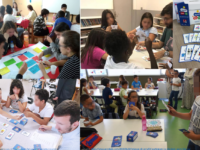
Mexicans' financial capabilities are below the average of G-20 countries, worsening their quality of life: 68% say "money is for spending", consequently 65% live from hand to mouth (OCDE, 2017). AFORTUNADA MENTE is a didactic board game for children, families and entrepreneurs to develop financial and socio-emotional capabilities. It's intuitive, agile and ludic, and promotes personal development and social impact through the game's challenges.
Enhanced In-Home Disability Supports (EIHDS) is a pilot project designed to support families of children with disabilities who are in crisis or at risk of being moved to a residential placement. Through the pilot, supports needs are identified and new and innovative ways to provide respite and support are tested. The project is helping families build confidence in caring for a child/youth living with disabilities. It is helping increase the quality of life for families to stay together.
The Ministry of Mines of Peru, alongside the IFC, BHP, various mining companies, and CISCO developed the Mining InfoCenter, a one-stop-shop social and digital innovation to provide mining-related information and capacity building to local leaders. The system will enable them to access information from the private and the public sector, build their capacities, and provide feedback to mining companies and the government, generating an informed dialogue that drives local development and contributes…
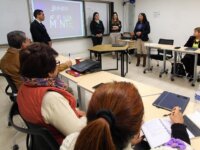
The Open Innovation Team was created by an official inside government to deepen collaboration between policymakers and academics. Policymakers from across government approach the team looking for evidence, analysis, new ideas, or challenge from outside voices. The team connects them with experts and organises workshops, writes reports and provides reviews of evidence. The purpose of the team is to open up the policy process to outside experts, and help ensure policy is anchored in evidence.
An innovative maritime communication system enabling: 1. Invisible and unidentifiable VHF communication becomes visible in real time with one click. 2. A ship's past routes and/or frequently navigated routes, which were previously unrecorded, will be made known through big data-based analysis that fully reflects the ship's characteristics and general routing patterns. 3. Invisible voices will be made visible through an automatic transcription system based on voice recognition.
The State Government of Pernambuco has created a hub for public innovation - "Usina Pernambucana de Inovação". The Usina offers help and guidance for public institutions to innovate. With the Usina, the government can improve and disseminate knowledge about innovation, facilitate experimentations, evaluate projects and portfolios to reduce risks, optimize resources allocation and use, and create a strong culture of innovation.
“Agora Falo Eu!" is an educational card game consisting of 8 question cards and 120 image cards destined for children between 7 and 13 years old. During the game, participants are invited to answer the question cards with the picture cards they are given.   The game aims to help children explore themes of citizenship and development; define their interests and identify the most suitable media to work on citizenship and civic participation; and promote engagement in democracy.
With the rise of single households and an aging population, society is demanding a guarantee for healthy living and welfare services. The district has launched customized caregiving services using KakaoTalk messenger, mobile phones, and AI speakers to promote the health and well-being of the socially vulnerable class in particular. To deal with the issue of solitary death, the district utilized their strength in information and communications technology to tackle the issue.
With less than a third of world researchers or STEM graduates as women, accelerating achievement of gender parity is not just a fairness argument but an economic imperative. EY and Tribal Planet have launched an innovative gamified platform that engages girls from underserved communities in fun, practical and gamified STEM learning. Through the platform, the innovation has energised public-private partnership, connecting governments and citizens to create an ecosystem of support, awareness and…