
Who gets to set the direction of travel has been identified as a key concern of challenge led policy. Utilising an online crowdsourcing tool, the challenge prize Solution 100 provided a novel approach to addressing this question. By crowdsourcing the challenge formulation, the competition organisers built legitimacy for the prize along with a deep understanding of the challenge that was to be addressed. The chosen method combined knowledge gained through crowdsourcing and expert panels.
Case Study Library
Where innovations are collected and shared to disseminate and replicate good ideas

Innovations:
0
This website, as well as any data and map included herein, are without prejudice to the status of or sovereignty over any territory, to the delimitation of international frontiers and boundaries and to the name of any territory, city or area.

What if you were given $100 that you could use to support local candidates of your choice running for office in your community? In Seattle, more than 480,000 residents were given four $25 vouchers they could give to candidates running for local office. The goals of the program are to increase the number of residents donating to local campaigns and to encourage residents to run for local office.
Learning Together for Better Public Engagement (Learn4PE) was a pilot initiative designed to build public engagement capacity across the Government of Canada. In its first iteration, participants spent five weeks learning together in English and French, both online and by participating in live sessions with experts. While targeted towards federal public servants, registration was open to all, enabling the exchange of relevant ideas and resources.
Informed Participation is a unique way to bring the public into government decision making. It gives government a method to solve complex issues with the public in a way that gives them a meaningful role in balancing competing interests. Public policy is becoming increasingly complex and trust in government is declining, so new innovative ways of engaging with citizens is needed. This method shifts engagement from obtaining buy-in to building ownership and creates more legitimate solutions.
CORO, Co-lab is the result of an ambitious vision of creating innovative collaborations. The local innovation platform creates new sustainable solutions to complex societal challenges. It takes place in cross-sectorial cooperation’s between public organizations, academia, civil society and businesses across industries. Through the activities, new sustainable scalable solutions are developed, using the entire area of Roskilde as a unique real-life test platform with demonstration facilities.
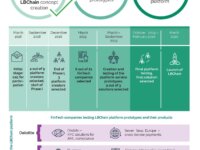
LBChain is a blockchain-based technological sandbox which combines regulatory and technological infrastructures and allows start-ups to test their business solutions in a controlled environment. The platform will enable start-ups to gain new knowledge, carry out blockchain-oriented research, test and adapt blockchain-based services and offer state of-the-art innovations to their customers.
IPGAIN (Intellectual Property Global Artificial Intelligence Network), created by IP Australia, is a worldfirst marketplace providing global access to pioneering artificial intelligence (AI) and machine learning (ML) tools. IPGAIN is like an app store, sharing ground breaking technology that solves challenges unique to the IP community. This initiative is driving collaboration and reducing duplication between national IP offices, to improve quality and consistency across the global IP community.
Work 2.0 Lab is a new collaborative working and learning environment. It is available to all agencies and civil servants in government and other organisations involved in the 2-years experiment. The purpose is to promote better, higher quality ideas, solutions and decisions on cross-cutting matters outlined for example in the government program. Work 2.0 Lab provides the structures and platforms (environments, spaces, networks, methods) for collaborative learning needed to work together.
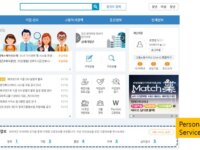
It is difficult for job seekers to identify the employment information that applies to them. "The Work" is a service provided through 'Work-Net', Korea's public jobs portal network. The service uses AI technology to analyze job seeker data and to provide employment infortmation that is tailored to each user. The service offers recommended information to job seekers in six job-related categories. By using the service, the time it takes to search for the information is reduced drastically.
Estonian Government has launched an action plan for life event service design. The target is to have by the end of 2020 seven life event services designed and live. One of the first of these life event services is having a child service that has the first part of it, proactive offering of the family benefits is live since October 2019. It means that once the birth of a child is registered and given a name, an email is sent to the parents to receive family benefits.