
Employment and Social Development Canada (ESDC) led the design and implementation of a national poverty reduction strategy public engagement process. We offered Canadians multiple ways to share their views, from public town hall events to online discussions, to a youth contest, to an in-depth research project. The engagement process successfully reached thousands of Canadians in a short time frame on a low budget. The plan is now used as a Government of Canada model for effective civic…
Case Study Library
Where innovations are collected and shared to disseminate and replicate good ideas

Innovations:
0
This website, as well as any data and map included herein, are without prejudice to the status of or sovereignty over any territory, to the delimitation of international frontiers and boundaries and to the name of any territory, city or area.
As a criminal court judge I felt the need to implement concrete actions to establish a new way of adjudicating in my country (Argentina) by relying on Open Government’s principles. Among some of the implemented policies, we publish all of the court's decisions, the court hearings' agenda, statistics and reports on the administration of the court and the biographical information of the court's employees. We do so by using our Twitter (@jpcyf13) and YouTube accounts.
In June 2017 the Government created a Social Innovation and Social Finance Strategy Co-Creation Steering Group (SG) to provide recommendations for a Strategy. Based on a year-long process the SG developed 12 recommendations.
In response, the Government announced the Strategy’s foundational elements in November 2018 including a $50 million Investment and Readiness program to build the capacity of organization to access social finance and a $755 million repayable Social Finance Fund.
The Client Centric Policy Playbook strengthens the ability to engage clients in the design of program and service policies.
Through extensive engagement with policy experts and employees on-the-ground, the Playbook has brought together innovative best practices, tools and resources for engaging clients.
This solution enhances client experience by giving clients an opportunity to be part of the policy generation process and by ensuring that programs and services are reflective of their needs.
Case Study
Future Skills: Engaging governments and stakeholders to build a skills development ecosystem
Future Skills is part of the Government’s plan to build a resilient and confident workforce that reflects Canada rapidly evolving nature of work. It embraces user-centred design principles to inform the adoption of proven practices and evidence on skills development approaches, to ensure that Canada’s policies and programs are prepared to meet Canadians’ changing needs. It was designed in collaboration with provincial and territorial governments, and informed by a large range of…
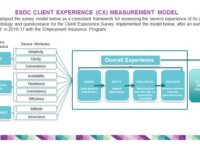
The Client Experience Measurement Survey Model was developed by Employment and Social Development Canada to gather and analyse client feedback to improve service delivery to its clients. Canadians have been able to express their views on government programs and services, which have informed the way programs and services are designed and delivered. The survey allows the tracking of service satisfaction, ease of access, effectiveness of service delivery, and the experience of particular programs…
The Indigenous Early Learning and Child Care (ELCC) Framework is innovative because it represents a promising practice in the development of a comprehensive policy, program and implementation strategy that was co-developed with the Government of Canada and Indigneous peoples. The document recognizes the value of Indigenous-led, culturally-grounded programs and that supports their health and wellbeing, spiritual, social and educational development, and language and culture.
With a citizen-centric approach and a strong focus on co-creation, SIMPLEX is a simplification and modernization program focused on improving public service efficiency and designed to facilitate the citizens and businesses everyday life, and their interaction with the public administration.
Launched in 2006, it had several editions since then and resulted in the implementation of hundreds of initiatives that cut red tape, reduced context costs and used ICT to deliver better public services.
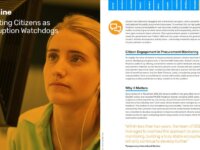
Innovation helps citizens extract value from open data on the use of public funds and fosters accountability of public authorities for goods, services and works purchased. With the help of the electronic platform, the citizens and business can complain about non-competitive behaviour, poor quality or check the efficiency of procurement by their city council, school, hospital. Introduction of AI-powered risk monitoring allowed anyone to find and act upon violations in a fast and simple manner.
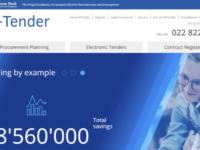
MTender is a revolutionary tool which will transform the way public funds are spent in Moldova, a country with a long history of corruption.
The world’s first fully digital public procurement system, MTender uses open data to manage every element of the public contracting system. This enables officials to do their jobs better, citizens to hold the government to account, taxpayers to get a better deal, and businesses to compete on a level playing field.