
Amputee patients were staying in the hospital for extended periods of time due to poor healing and outcomes. The physio department used a machine traditionally used to treat back and joint pain, to increase wound healing time. The machine decreased the patients' length of stay by 20% and reduced edema. This decrease in edema assisted in less need for the shaping of the stump.
Innovation Tag: Experimentation
The ‘Reproducible Analytical Pipelines’ project is a collaboration between several UK Government departments to revolutionize the way statistical publications are produced. By using open source software, statistics can be produced more quickly, with automated quality control, in a way that is easier to reproduce, and share. This open approach leads to more transparent, higher quality statistics.
Summer Design School is a new approach to teaching and learning human-centred innovation for government employees. It accelerates the development of critical thinking, creative collaboration, and human-centred design capabilities in civil servants with little to no previous exposure to design methods by means of an immersive, cross-sector, experience based curriculum.
Laboratori di Quartiere has set up a stable model to link public resources with citizens, engaging them in proximity policy-making across Bologna’s districts. The objective is to shift from the paradigm of smart city to a collaborative “Augmented City”, requiring citizens to not just collaborate to the co-design of urban spaces instead to become responsible of the ongoing transformation.
Le LabZéro est un laboratoire d’innovation publique qui poursuit des objectifs “zéro”, comme “zéro personne à la rue”. Afficher une forte ambition permet de mobiliser les énergies et d’encourager la créativité. C’est un lieu tiers, piloté par l’État régional et animé par une équipe d’horizons différents, qui rassemble tous les acteurs concernés et volontaires pour trouver de nouvelles réponses aux questions de politiques publiques.
Carrot Rewards is a platform promoting healthy living and public engagement that leverages behavioural economics, mobile tech and the power of loyalty programs to motivate and educate users to make better everyday lifestyle choices for themselves, their families and the planet. Created in collaboration with public sector agencies, leading Canadian health NGOs and the private sector. With over a million downloads, Carrot is driving sustainable positive behaviour change on a population scale.
Instead of composting or incinerating invasive alien plant species, we are developing new ways how to process them into new, useful products (paper and wood products, dyes and hybrid coatings, extracts for controlling of plant harmful organisms, food source, input materials for the industries of the future and 3D composites). Invasive alien species are a locally accessible and abundant resource and opportunity for a new business model, promoting zero‑waste approach and circular economy.
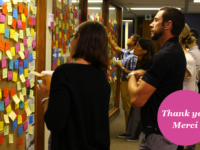
The OEE established a Social Innovation "UnLab" (SIU) to test an embedded innovation model and amplify energy efficiency policy and service impacts in Canada. The SIU creates value for energy efficiency stakeholders in three ways:
Building relationships and capacity for energy efficiency policy and service innovation;
Generating evidence and collective learning by co-creating and testing insights and interventions;
Amplifying impacts by scaling learning and implementing what works.
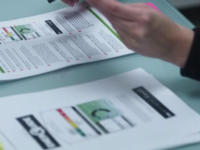
A first of its kind (in our context), cross-jurisdictional partnership between three levels of government to research, co-design and test prototypes with citizens to inform and improve the experience and uptake of home energy efficiency labeling and reporting.
The core team was comprised of representatives from Natural Resources Canada’s (NRCan) Office of Energy Efficiency (OEE), the Province of Alberta’s CoLab, and the City of Edmonton with service design support from Situ Strategy.
In May 2016, the Mayor of San Francisco launched the Safe and Clean Neighborhoods Promise. This was a new initiative to improve the quality of life in San Francisco with a coordinated approach to delivering City services better and faster. He issued an Executive Directive to Department Heads responsible for quality of life issues directing them to prioritize services so all residents have access to clean, safe, maintained public spaces and facilities. To ensure success, the mayor created the…