
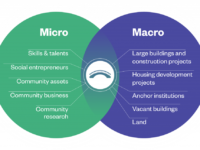
USE-IT!, Unlocking Social & Economic Innovation Together!, is a whole neighbourhood approach to addressing urban poverty.
It innovates by building bridges between the places, the people, the public sector, the private sector and civic society partners in a community so they can co-produce solutions to poverty that unlock opportunities and that fits their needs.
By doing this, USE-IT! works by respecting what is already there in a community rather than by assuming what needs to change.
Innovation Tag: Public Policy
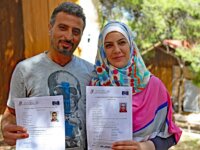
The European Qualifications Passport for Refugees is a unique instrument providing refugees with an assessment of qualifications that cannot be fully documented. Based on the Lisbon Recognition Convention (Council of Europe/UNESCO), the methodology tested by the Council of Europe, the UNHCR, nine countries, National Recognition Centres and universities enables refugees to have their qualifications accepted across borders to continue their studies or find a job related to their education.

What if you were given $100 that you could use to support local candidates of your choice running for office in your community? In Seattle, more than 480,000 residents were given four $25 vouchers they could give to candidates running for local office. The goals of the program are to increase the number of residents donating to local campaigns and to encourage residents to run for local office.
Dutch Reach Project (DRP) closes a serious gap in existing road safety efforts to prevent “dooring,” a common, feared & at times fatal crash caused when exiting motorists - using their near hand - suddenly throw open their car door into the path of a bicyclist or other vulnerable road user (VRU).
To prevent dooring, DRP promotes the Dutch Reach (DR): reaching across to the door with the far hand to open - a much safer method.
The DR project is already gaining increasing attention and being…

The Arlington Restaurant Initiative (ARI) is a voluntary accreditation program which aims to increase safety and economic viability for restaurants and special events in Arlington County, VA. The Police Department has partnered with County agencies to establish a holistic approach to nightlife management and raise standards of restaurants that serve alcohol. ARI has been successful in reducing alcohol-related violence and building mutually-beneficial relationships with stakeholders.
SciTech DiploHub is a pioneering nonprofit public-private partnership backed by leading research centers, universities, non-profits, startups, corporations and public institutions that deploy Barcelona's science and technology diplomacy strategy. It has the mandate to elevate the role of science, technology, and cities in foreign policy and make Barcelona a more influential player on the global stage through its contribution to sustainable development and the global public good.
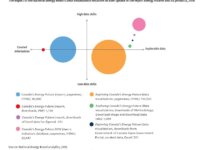
In 2016 the NEB launched the Data Visualization Initiative to face the challenge of producing usable and useful data to go beyond using new technologies to deliver better service to citizens. It created multiple products from the same information to expand public participation in the energy dialogue and enable evidence-based decision-making. These products include interactive data visualizations and other materials, such as high school lesson plans, as a new way to engage experts and nonexperts.
The Australian government is transforming employment services to improve how the system works for job seekers, employers and the community.
Transformational change requires genuine consultation to capture the diversity of views of stakeholders affected by changes, identifying pain points, testing ideas and laying the groundwork for sustainable policy reform.
A citizen centric approach helps to understand the real-world impact, leading to better outcomes and greater acceptance in the community.
Community Connects is a pilot project that came out of the Transportation Innovation Lab. Problem/Opportunity: Cape Breton Regional Municipality (CBRM) is a region with high levels of poverty and unemployment. Innovation: Taxi service, doorstep pick-up, defined drop-off points, flat rate: $7 seat. Why innovative? In short, the approach (social innovation lab) and those that were engaged (first-voice participants).
Case Study
Partnering for success: a regional monitoring system for social equity and inclusive development
A multistakeholder partnership created a regional indicators-based monitoring system to track pro-poor health policy change across the Southern African Development Community (SADC), a low-income region beset by socio-economic costs of a high disease burden. This stimulated SADC’s Result-Based Regional Monitoring and Evaluation initiative. Extending to all SADC priority areas, Results-Based Monitoring and Evaluation (RBME) enables real-time tracking of regional performance, documentation of…