
The Lab is an all-of-government neutral space enabling agencies to collaboratively innovate to make it easier for people to access government services. It's a design & development lab to experiment, drive and enable the systemic change of government for the benefit of society. We are providing a way to direct public funding to systemic improvements, horizontal efforts around shared goals, capability uplift, high value reusable components and actionable innovation for all participating agencies.
Innovation Tag: Skills and Competencies
Case Study
“Joint effort towards best results” Result oriented management and stakeholders engagement as an…
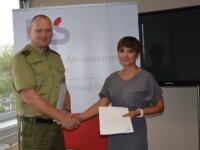
In light of the merger of three fiscal agencies into one, the Opolskie Revenue Administration developed a management model aimed at achieving the best results which is tailored to the needs and expectations of employees and the surrounding society. The new management model obtained a better understanding of the tax administration's mission by the local community by focusing on: user-centricity; stakeholder involvement in tax office to show transparency and public involvement; and listening…

The Free Education platform is an open and collaborative learning space that seeks to awake the interest of Brazilian youth in their personal and professional development. It is a free, open platform, and its practical, interactive content is especially directed at lower income youths (between the ages of 16-24), that have not completed high school and do not have the necessary skills to find employment or interest in continuing their studies through formal education.

GovTech Poland is a completely new way of bringing innovations to the public sector. We have set out to define new procurement rules, set standards and build bridges between innovators and officials. Organising competitions, workshops, and introducing new digital solutions ourselves, our objective is to make the administration an agile, responsible partner for SME's and startups.
A customer-friendly emergency service model from Finland where the public can find all the assistance they need at one point of service, instead of across several sites. In addition to somatic emergency services, psychiatry, substance abuse and violence prevention, crisis and social work, and child protection are available. The interprofessional model means collaboration towards a shared goal. The operational model, available anywhere in the world, improves emergency services.
The ‘Reproducible Analytical Pipelines’ project is a collaboration between several UK Government departments to revolutionize the way statistical publications are produced. By using open source software, statistics can be produced more quickly, with automated quality control, in a way that is easier to reproduce, and share. This open approach leads to more transparent, higher quality statistics.
Over a third of U.S. federal employees are eligible to retire in the next five years, yet only 6% of employees are under 30—a pressing issue given the rate of innovation. Piloted as an effort between agencies and a student-led nonprofit, the Civic Digital Fellowship recruits the next generation of technologists—students and recent grads—pairing them with in-need agencies. It has scaled to six agencies, and is an attractive on-ramp for technical students into public service.

Department of Community Services has piloted Career Rising program which provides a continuum of employment-related supports that help break the cycle of inter-generational poverty. The program is designed to provide youth with comprehensive and sustained support that will lead to increased participation in academic and economic activities. Youth participants gain employability and leadership skills, build confidence, connect to community, engage academically, and help meet labor market needs.
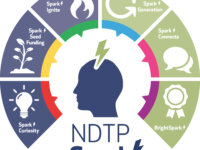
National Doctors Training and Planning has commenced The Spark Innovation Program, designed to empower junior doctors to innovate and make positive changes within the public health system.
In a traditionally bureaucratic environment where innovation is not encouraged, the Spark program not only enables innovation but actively encourages it. Through this empowerment of initiative, creativity and expertise, retention of staff is also addressed and morale increased.

In Argentina, public servants are getting promoted according to their innovation level. To support this initiative, The Design Academy for Public Policy teaches public servants how to innovate. At the Academy, we teach the core skills and innovative tools public servants need to acquire in order to solve future public challenges, and at the same time empowers them to be part of a cultural change within the government.