
Skip to content
An official website of the OECD. Find out more
Created by the Public Governance Directorate

This website was created by the OECD Observatory of Public Sector Innovation (OPSI), part of the OECD Public Governance Directorate (GOV).

How to validate authenticity

Validation that this is an official OECD website can be found on the Innovative Government page of the corporate OECD website.

View as: Map

Filter by:

Countries

Level of government

Sector

Year of launch

Stage of innovation

Recognition

Innovation Tags

Innovations:
0
This website, as well as any data and map included herein, are without prejudice to the status of or sovereignty over any territory, to the delimitation of international frontiers and boundaries and to the name of any territory, city or area.
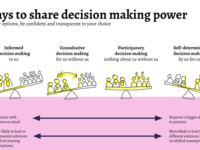
When planning began for a first-of-its-kind Urgent Mental Health Care Centre as an alternative to a failing emergency department experience, a new standard that centred people with lived experiences in system reform decisions was needed. People with lived experiences came together to co-create a philosophy of care for the centre that would uphold service integrity, hold implementation providers accountable, and communicate the care experience and service culture that people expect.
Yes, We Rent! has transformed the private rental market by creating a new agent working in partnership with the municipality (hybridization of public policies). Successfully established on 2/2021, “Bloc cooperatiu” is an unprecedented cooperative that gather together tenants willing to search, renovate and rent collectively scattered empty flats, as a way to (self) generate affordable and stable housing targeting low-to-medium income households. It is already managing 61 flats and 105…
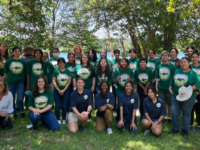
The Austin Civilian Conservation Corps (ACCC) began as a pandemic response program to help residents earn income and access green careers, and has evolved into a leading model for equitable, climate-focused workforce development. The ACCC, a collaboration with 10+ City departments and multiple community partners, has provided over 125 living-wage opportunities with supportive services, training, and career pathways for Austin’s underserved residents, and is actively shaping the green economy.
Since October 2020, as part of supporting economic recovery from the pandemic, South Africa's Presidential Employment Stimulus has created over a million jobs and livelihood opportunities, mainly for youth and women, across all skills levels and with high levels of spatial equity. It has 're-imagined' public employment (or public works) as an instrument for social innovation at scale, in relation to the forms of work and public value created, unlocking initiative in and beyond the state.
Collections of Ghent is an EU-funded innovation project designed to tackle the urban challenge: How to digitise cultural heritage beyond the cultural institutions, on a city level or higher. And how to use it to improve social cohesion and inclusion within a neighbourhood. It is both a digital transformation project, and a social innovation project where we research how digital cultural heritage can be used in co-creative and participative way.
Aboriginal Children in Australia are 11.5 times more likely to be placed in out of home care then non-Aboriginal Children. Marram-Ngala Ganbu is an Aboriginal designed and delivered Court based program that seeks to provide a more effective, culturally appropriate and just response for Aboriginal families through a court process that enables greater participation by family members and culturally-informed decision-making.
Neighborhood Joint Delivery was introduced in 2022 to solve delivery issues. Delivery volume in Seoul since 2015 has increased by about 2.8 times, causing traffic, environmental, safety and labor problems. Seoul will create regional bases that integrate services from several couriers to deliver parcels collectively, reducing distance traveled by 50% and improving efficiency by 40%. The eco-friendly bases will collect recyclables, and serve as a base for unmanned autonomous vehicles.
Aapti's the Driver Advisory Council (DAC) represents a new framework for engagement between gig workers and platforms in the ride hail space - a first of its kind initiative in India. The larger aim of this innovation is to create a mechanism for platform governance that focuses on gig workers rights, enabling participatory action and reflexive praxis. To this end, we’ve engaged with public bodies such as India’s NITI Aayog to socialise the DAC and its novel approach to platform work.
Challenge tenders are a new model designed to solve urging needs of the health system which usually aren't attractive enough for the start-up industry to engage in, such as fall prevention among elders, improvement of geriatric care in long term facilities and others. In order to attract digital based solutions to enter the health system, we initiated an innovative method of intervention which allows quick testing of technologies in health organization with MOH support for fast proven outcomes.
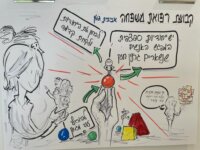
Covid-19 outbreak and the new reality led to increase in the demands for remote health services. The health system faced with an adaptive challenge of redesigning remote health services in no time. The Digital Health Department at the Israeli Ministry of Health founded a cross-organizational and cross-professional health practitioners’ community to advance wide scale, informed and safe telemedicine practices through the creation of a learning environment, knowledge sharing, and joint action.