
The General Hospital Asklepieio Voulas has developed an exercise-based cardiac telerehabilitation program in order to increase the participation of eligible patients in cardiac rehabilitation services. Through this, Government and cardiovascular patients will benefit since participation in a CR program can reduce the risks of death and hospital readmissions. To our knowledge this is the first attempt to develop a telerehabilitation program offering a structured, real time, supervised exercise.
Case Study Library
Where innovations are collected and shared to disseminate and replicate good ideas

Innovations:
0
This website, as well as any data and map included herein, are without prejudice to the status of or sovereignty over any territory, to the delimitation of international frontiers and boundaries and to the name of any territory, city or area.
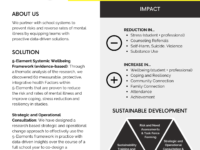
Mind the Class, a mental health prevention organization, is partnering with school systems to reduce the risks and reverse the rates of mental and behavioral health disorders by creating a community ecosystem. This full year project collaboratively designs a preventive implementation plan using proven wellbeing research and data-driven solutions in collaboration with our University of Warsaw partners and through local public and private partners support sustainable development.

In the VUCA (volatility, uncertainty, complexity and ambiguity) world, the tasks of the government are interconnected and require cross-border collaboration and dialogue within ecosystems. However, one of the key challenges is the lack of knowledge and easy-to-deploy tools. As partners of Work2.0Lab (Työ2.0Lab), we co-created and implemented Ecosystem School 1.0. Its purpose was to develop ecosystem thinking, capabilities and tools to support phenomenon-oriented work within ecosystems.

The Accountability Incubator is a creative peer learning program for young civic activists and change-makers who want to fight corruption and build accountability. It was developed to provide long-term support, networks and skills to people who are often overlooked by or left out of traditional civil society programs. It is innovative in that it uses creative tools, a long-term approach and the very latest thinking to shape governance globally.
The Smart Station project for future urban subway station has accelerated the digital transformation for public transportation industry, which has been slow to change, by applying fourth industrial technologies such as IoT, 3D digital twin technology, AI image analysis, and deep learning technology. Through this, the station has secured a control tower that can manage all lines for safe subway station operation, station workers can innovate their work through augmented reality UI systems.
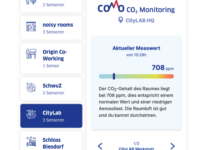
In COMo, the CO2 concentration (CO2 = Carbon Dioxide) serves as a measure for indoor air quality and aerosol pollution; the latter correlates with the potential (COVID) viral load. Objective CO2 readings via networked sensors enable operators to control the indoor air quality and thus reduce the risk of infection for visitors. Published data allow visitors to make decisions about visiting the facility.
All content is available under open source licenses (MIT, BSD, Creative Commons).
CGR has a great amount of available data that need to be exploited to improve its work, while deepening the digital transformation of the State to improve its quality.
The aim is to enhance data analysis through the use of algorithms to anticipate risks in the fight against corruption, as well as to improve the channels for citizen complaints.
We apply the use of data and technologies in our daily work, thus impacting the State.

The innovation is developed due to the need to integrate the process of financial reporting of projects with the acceleration program of Start-Up Chile, benefiting the entrepreneurs of the program and the Chilean Government itself. The process seeks to educate on the relevance of project financial planning, while preparing them to perform efficient and high standard financial reporting to the Chilean government.

PAZOS is an innovative alternative to dealing with the historically high juvenile homicide rate by using public force. It was developed because the city of Palmira was among the most dangerous cities in Colombia and the world; today we have the lowest homicide rate in the city's history. We attribute this achievement to an articulated and focused intervention, oriented to the dual functionality of targeting public spending and generating opportunities through policymaking.

The initiative was developed in response to the dispersion of sources for consulting information on the documents produced by the national government. The solution, a data catalog (datalog), generates an institutional memory of open consultation on different aspects that the outgoing government delivers to the incoming one. The tool is innovative in applying machine learning technologies to process, organize and present a large volume of documentary information in an agile and simple way.