
The NODC is a data catalog fully compliant with DCAT-AP, the European standard for dataset metadata. It is open source, developed on GitHub, and consists of other open source projects. It can be reused on various levels of government and addresses an important issue with currently available data catalog implementations not in compliace with today’s metadata standards.
Case Study Library
Where innovations are collected and shared to disseminate and replicate good ideas

Innovations:
0
This website, as well as any data and map included herein, are without prejudice to the status of or sovereignty over any territory, to the delimitation of international frontiers and boundaries and to the name of any territory, city or area.
The Artech project invites artists, entrepreneurs, and developers to use public data as a "raw material" for works of art based on traditional arts or digital media. Being a well-known and respectable medium to broad audiences, we see art, as an original and fresh way to expose new audiences to the importance of open data and its relevance. This is the first time that a government agency in Israel has directly sponsored a creative and innovative experience of this kind.
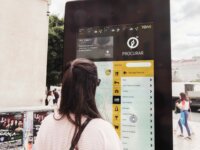
TOMI is a network of interactive street kiosks that allow every citizen to freely use public services on-the-go, in a simple, fast and convenient way, while performing their daily routines on the city streets.
By using TOMI, people can search for a specific public entity/service, choose the one that’s closer to their current location and take a virtual queue ticket to a given public service, with the possibility to require an SMS alert when their queue number is approaching.
« DK Plus de Mobilité » is an ambitious transportation policy led by the Dunkirk Urban District Council. This project aims to increase the share (less than 7%) of public transit in the Dunkirk area (200 000 inhabitants). The main challenge and specificity of this project – developed in consultation with local population - consists in combining the upgrading and modernization of transport infrastructures with the implementation of free public transport for all.
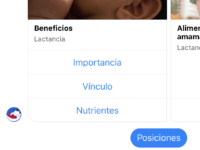
In Argentina 30% of women do not comply with prenatal check-ups and almost 1 in 10 have their first contact with the health system at the time of birth.
"Crecer con Salud" is a virtual assistant based on Facebook Messenger that works outside the health system, identifying and recruiting pregnant women where they are. The bot is designed to accompany women during their pregnancy and the baby's first year with personalized information and reminders of attendance to pre and post natal check-ups.
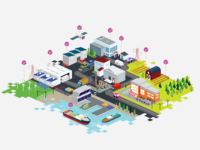
The European Commission led #Blockchain4EU as a forward-looking exploration of existing, emerging and potential Blockchain and other DLTs (Distributed Ledger Technologies) applications for industrial sectors. Through an experimental and participatory approach, this project allowed first to come up with an overview of promising applications across industries, and second to co-design five prototypes that physically showcase how Blockchain could be applied in the near future.
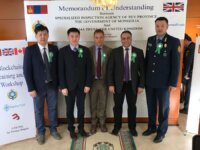
The Specialized Inspection Agency of Tuv Province and the Government of Mongolia Feasibility Study and piloted a project called “Counterfeit drug detection using Blockchain and AI” to eliminate fake drugs from the market, and save the thousands of lives. The project will increase safety and transparency of the drug industry, tracing the pharmaceutical supply chain in Mongolia, as well as globally.
In response to the generalized lack of political accountability and availability of public information, this online tool provides an open and qualified access to the Spanish Parliament’s activity, related to the implementation of the Agenda 2030.It promotes a transparent and participative implementation of this agenda and allows CSOs, policy makers and the media to monitor political proposals.The Spanish Government has included Parlamento2030 as one of the tools of its 2030 Agenda National…
Case Study
Innovative use of social media for co-creation of the 4th National Action Plan (2018-2020) –…
Innovative use of social media (Whatsapp) platform to increase participation and disseminate information for the creation of Paraguay's 4th National Action Open-Government Plan. These 14 online groups were created to allow citizens from the countryside, from marginalized and vulnerable groups, to be able to participate on an equal standing with other citizens from urban areas with access to policyholders. It is innovative because it was the first time we used this platform to involve citizens.
Not only is transparency in Brazil taken as the principle of publicity in public administration, but also as a Public Policy, led by integrated actions focused on achieving specific goals.
Brazilian Government has reaped concrete quantitative and qualitative transparency-driven results: saving of resources, reformulation of public policies and inhibition of misconduct and corruption acts.
The Transparency Portal is the core of the policy and central tool to promote results through transparency.