
Launched in June 2018, Openstat Madagascar is an open data platform to highlight the "how" Government should release their data. Developed in a country where there is no Access to Information law, data available on the platform are all under Creative Commons and used as tools for Open Data advocacy program. Other national entities which want to make their data available to the public are welcome for partnership.
Case Study Library
Where innovations are collected and shared to disseminate and replicate good ideas

Innovations:
0
This website, as well as any data and map included herein, are without prejudice to the status of or sovereignty over any territory, to the delimitation of international frontiers and boundaries and to the name of any territory, city or area.
Les Halles Civiques is a third-place network that gathers organisations working on citizen empowerment, public innovation, and democratic progress. Its members are researchers, designers, social innovators, entrepreneurs, etc. It aims to contribute to a richer and more inventive democratic life at the local, national and international level, and strengthen democratic innovation. It is also a physical space where citizens, professionals and representatives can work, meet and discuss.

A new waste management system, driven by information. Bogota has evolved its cleaning and recycling scheme, generating a profound transformation in the way in which citizens needs are met and garbage collection is managed. This model is based on the effective use of data and information. This initiative has allowed greater transparency in the actions of involved public and private organizations, an intense collaboration to provide the best service and enabling citizens active participation.
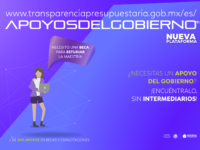
The information on the different procedures of access to benefits is scattered among many different agencies websites, whereas the platform "Apoyos del Gobierno" aims to simplify through Artificial Intelligence that any interested party can consult the details of Federal Government programs in a single place.
Based on neurolinguistics analysis, the platform not only provides predicted results considering relevant contextual words, but also enhances searches considering the user’s profile.
The NODC is a data catalog fully compliant with DCAT-AP, the European standard for dataset metadata. It is open source, developed on GitHub, and consists of other open source projects. It can be reused on various levels of government and addresses an important issue with currently available data catalog implementations not in compliace with today’s metadata standards.
The Artech project invites artists, entrepreneurs, and developers to use public data as a "raw material" for works of art based on traditional arts or digital media. Being a well-known and respectable medium to broad audiences, we see art, as an original and fresh way to expose new audiences to the importance of open data and its relevance. This is the first time that a government agency in Israel has directly sponsored a creative and innovative experience of this kind.
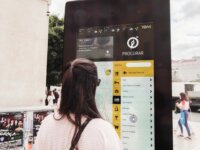
TOMI is a network of interactive street kiosks that allow every citizen to freely use public services on-the-go, in a simple, fast and convenient way, while performing their daily routines on the city streets.
By using TOMI, people can search for a specific public entity/service, choose the one that’s closer to their current location and take a virtual queue ticket to a given public service, with the possibility to require an SMS alert when their queue number is approaching.
« DK Plus de Mobilité » is an ambitious transportation policy led by the Dunkirk Urban District Council. This project aims to increase the share (less than 7%) of public transit in the Dunkirk area (200 000 inhabitants). The main challenge and specificity of this project – developed in consultation with local population - consists in combining the upgrading and modernization of transport infrastructures with the implementation of free public transport for all.
In Argentina 30% of women do not comply with prenatal check-ups and almost 1 in 10 have their first contact with the health system at the time of birth.
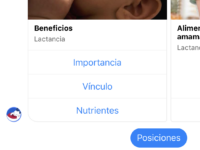
"Crecer con Salud" is a virtual assistant based on Facebook Messenger that works outside the health system, identifying and recruiting pregnant women where they are. The bot is designed to accompany women during their pregnancy and the baby's first year with personalized information and reminders of attendance to pre and post natal check-ups.
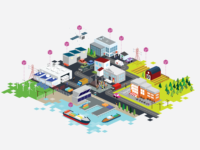
The European Commission led #Blockchain4EU as a forward-looking exploration of existing, emerging and potential Blockchain and other DLTs (Distributed Ledger Technologies) applications for industrial sectors. Through an experimental and participatory approach, this project allowed first to come up with an overview of promising applications across industries, and second to co-design five prototypes that physically showcase how Blockchain could be applied in the near future.