
Country: Brazil
The reason for creation was to improve inspection models of external control, which were based mainly on legality and conformity. IEG-M index is an instrument for measuring public area effectiveness, as it analyses the inputs, resources and processes of the local administration, evaluating its policies and activities. There are many finalistic results indexes, but none of them deals with the evaluation of processes to analyse the application of public money that impacts local communities.
Most Brazilian metropolises have a transport network operated by a private company which makes it difficult for transport authorities to have a bright view of the public transport functioning. TRANCITY is a public transport monitoring dashboard which integrates different sources of data, such as bus location, ticketing and cameras, providing real time and historical information that supports management, planning and the operation of public transport networks, with data driven evidence.
BORA (acronym for "Online Relationship Database for Evaluators", in Brazilian Portuguese) is an innovative online application developed by ENAP that connects research professionals and policy managers around the country. The app makes it possible to link the needs of Brazilian public administration for high-quality policy analysis and the research of well-targeted projects by specialists based on a quick, transparent and free solution.
The Startup GOV.BR Program aims to accelerate strategic digital projects at federal government in an unprecedented and innovative way. By providing technological tools, allocating professionals and assisting them to adopt agile methodologies, it supports a 30-crosscutting-project portfolio with several federal agencies. The initiative has promoted a paradigm shift in the management of public digital solutions, incentivizing agility, resilience and value generation for citizens and general users.
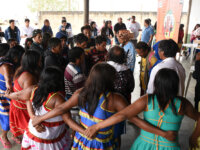
When I began working as a judge in the town of Águas Formosas (in Minas Gerais, Brazil), I discovered that the region was inhabited by more than 2,000 Maxakali Indians, who lived in large villages and spoke another language. I researched their access to justice and realized that they suffered from many rights violations. With the support of the Court of Justice of Minas Gerais and the Regional Electoral Court, I created an innovation project to bring citizenship, democracy, and justice to the…
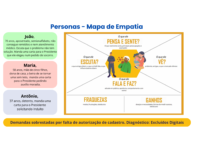
The General Ombudsman Office/CISET/SG/PR (OUVPR) is considered, by part of the population, the highest instance of support for solving problems of access to public services. Among the different social profiles that seek assistance, a large portion of "digitally excluded" stands out; according to IBGE (2018) they represent 25.3% of the Brazilian population. The innovation was due to the unprecedented automation of the process, enabling isonomic treatment of the demands of the "digitally…
SIMPLESMENTE is an acronym formed by the initials of 12 mechanisms studied by the behavioral sciences. SIMPLESMENTE is an application to simplify and support the use of behavioral sciences in public policy designs. Based on a guided script, users define a problem of interest in public policies and are encouraged to assume the user's perspective. They are invited to apply a series of references, based on evidence and international practice, to improve their understanding of the situation and…