
“Madrid, Digital Capital” is a city-wide transformation model that redesigns how Madrid delivers services and makes decisions using real-time data and digital tools. It simplifies procedures, improves daily services and helps the city respond faster to citizens and businesses. It is innovative because it turns digital transformation into a single, measurable system for running government, not just isolated projects, and that is fully user and citizen centred and also environmental centred.
Innovation Tag: Data
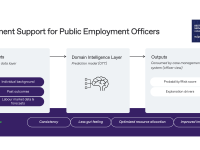
OTT2 helps Estonia’s Unemployment Insurance Fund identify which jobseekers are most at risk of long-term unemployment. It combines data from public registries and updates each person’s employment outlook as their situation changes, helping counsellors provide more timely and tailored support. This is innovative because it replaces a labour-intensive and inconsistent manual process with a dynamic, explainable and highly accurate system that improves how public resources are used.
Case Study
No Cancer Left Behind: A Sovereign AI Safety Net for Chile’s National Health Waiting Lists
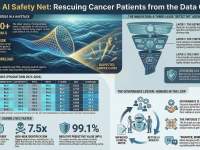
Chile manages 400,000+ surgical waiting list records monthly. Cancer patients often remain invisible within this volume — despite facing 7.5x higher mortality than the rest. We built a sovereign in-house AI that screens oncological risk across all 29 national Health Services, flagging a high-risk group in hours instead of weeks. Sensitivity: 95%. Manual review burden cut 99.76%. No vendor, no black box: AI flags risk, humans decide. Every patient, every region, the same standard.
Case Study
MiGestión Platform: Participatory Planning and Intelligent Monitoring for Modern, Efficient Local…
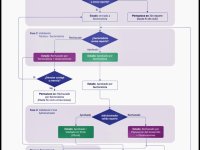
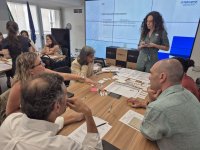
Ibagué faced two challenges: symbolic participation, with proposals often disappearing in paper-based processes, and fragmented manual reporting. “MiGestión” addresses these challenges through Lego® Serious Play® workshops, where citizens build their dream city while proposals are captured on tablets, validated on site, and georeferenced. An in-house platform links these inputs to the Development Plan, Action Plan, budget (POAI), and investment projects (PIIP). Today, over 2,700 citizens…
The Matrix gives public organisations a data‑driven understanding of how their services work for people. By combining user experience, operational and regulatory data, it exposes the areas where improvements matter most. It then guides teams to act on that evidence, helping create more effective and responsive public services

Despite ambitious climate pledges, a persistent “last-mile” gap remains: individual climate actions are often undervalued within existing frameworks. Gyeonggi Province addresses this gap by converting verified citizen actions into measurable public value and rewarding participants with local currency to support local economies. By reinvesting these rewards in climate technologies, the initiative transforms citizens from policy beneficiaries into active co-creators of a sustainable future.
A digital platform that provides strategic and prospective quantitative and qualitative information, specifically on trends, risks, opportunities, scenarios, future events, and other topics. It is designed for use, consultation, and input by planners and the general public. It seeks to reduce the information gap, ensuring the validity and up-to-date nature of data for the formulation of plans and policies, thus facilitating the anticipation of challenges and the exploitation of opportunities.
Career information systems are of utmost importance, especially in countries with a dense young population like Türkiye. The primary responsibility of career counsellors is to conduct guidance activities to assist individuals in making choices, decisions, and preparations for their future occupations and careers. To support this mission, the Career Counselling Information System has been developed and made available to career counsellors.
The project proposes a system for extracting and analysing information from the medical records of breast cancer patients, using artificial intelligence. This would support research, personalised medicine and health decision-making, benefiting clinicians and regional authorities. This provides an automated alternative to accelerate translational research, promote personalised medicine and improve the efficiency of health services.
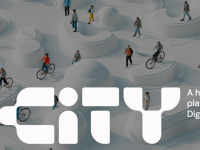
vCity is a human-centric platform for urban digital twins, with the goal of improving life quality within the city by assisting urban planners make evidence-driven urban decisions. vCity's innovative approach combines 1) simulation by designing virtual replicas of the cities, 2) what-if scenario tools in urban planning and 3) getting the "pulse" of the city from digital platforms for citizen participation.