
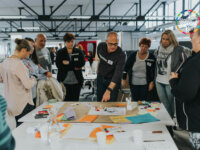
The Government of Slovenia has developed a new approach to preparing government services and public policies. Through specially designed workshops with a 360° approach to different stakeholders, these so-called ˝Policy Jams˝ aim to develop citizen-centred policy solutions. Based on systems theories and service design principles they open up the discussion space, while gearing participants toward finding viable innovative solutions.
Innovation Tag: Organisational Design

GovTech Poland is a completely new way of bringing innovations to the public sector. We have set out to define new procurement rules, set standards and build bridges between innovators and officials. Organising competitions, workshops, and introducing new digital solutions ourselves, our objective is to make the administration an agile, responsible partner for SME's and startups.

Service shop, developed by the municipality of Larvik:
- is an online booking and calendar solution that allows service recipients to determine the time of receiving municipal services based on the recipients own calender and wishes
- is a secure solution that takes care of the privacy of the service recipients
- makes it easier for the employees to plan their days, the service order automatically generates employee workflow.
The Open Innovation Team is a new Cabinet Office team created to help departments generate analysis and ideas for priority projects by deepening collaboration with academics. We boost engagement between officials and academics by organizing tailored events and visits, and we get academics involved in research and policy projects by inviting them to work alongside us in Whitehall.
Rede Bem Cuidar (Well Caring Network) is a network of Local Health Units, each acting as a multi-generational social hub. Incorporating a community engagement process that involved local representatives, UBS staff, and community members. The resulting renovations are designed to improve healthcare facilities and services, support employee wellbeing, and create much-needed community space.
Sustainability bond with impact-linked return (SBIR) is an innovative funding model to unlock social impact investing which advances the potential to drive public sector change and to attract a broader range of investors, while also financing social infrastructure. The overall goal is to expand investor base for impact investing and build public sector capacity to tackle various social challenges.
The Flexi-Team helps advance top priority political projects, which could not have been implemented with the currently available staff. The team supports all divisions of the ministry that have temporary staff shortages due to absences or unfilled positions, or due to short-term projects. Furthermore, the Flexi-Team promotes a more flexible work environment in the ministry e.g. by establishing the use of modern knowledge management methods and by offering support in creative design processes.
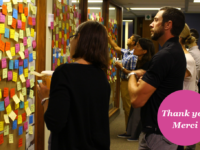
The OEE established a Social Innovation "UnLab" (SIU) to test an embedded innovation model and amplify energy efficiency policy and service impacts in Canada. The SIU creates value for energy efficiency stakeholders in three ways:
Building relationships and capacity for energy efficiency policy and service innovation;
Generating evidence and collective learning by co-creating and testing insights and interventions;
Amplifying impacts by scaling learning and implementing what works.
With the complex service system, it is difficult to help young people with numerous problems. The MY LIFE working method is a co-created, human service integration for young adults, complete with case management, a survey assessment, and an ePlatform.
We have brought together all data projects into a single programme to provide strategic oversight and a common vision. This encompasses a number of projects which are driving the department to better enabling data sharing, creating comparable datasets, open up our data for others to use and connecting our own data with others- transforming the way DCLG’s data can be used.