
Work 2.0 Lab is a new collaborative working and learning environment. It is available to all agencies and civil servants in government and other organisations involved in the 2-years experiment. The purpose is to promote better, higher quality ideas, solutions and decisions on cross-cutting matters outlined for example in the government program. Work 2.0 Lab provides the structures and platforms (environments, spaces, networks, methods) for collaborative learning needed to work together.
Innovation Tag: Service Design
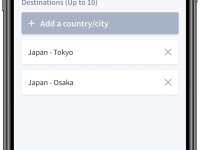
Parents Gateway is a one-stop, centrally coordinated app streamlining engagement between parents and schools, capable of direct mass communication of time-sensitive messages of high level of importance to all parents nationwide. With curriculum time saved, teachers previously burdened with onerous administrative work are free to focus on core teaching and to better meet students’ needs. Parents stressed by disparate admin processes for children in different schools can now manage all in one…
Case Study
Protecting public health and reducing the availability of illicit tobacco products through the…
Tobacco use is extremely harmful to health and its illicit trade causes billions in tax revenue losses each year. The EU Tobacco Products Directive (TPD) provides for the establishment of a tracking and tracing system that enables the authorities to follow the movements of every packet of the 26 billion or more sold or produced in the EU, along every step of the supply chain, via real-time reporting by industry. The system is a tool for authorities in implementing their tobacco control policy.
The former municipality of Molenwaard was the Netherlands’ first local council to operate without a town hall. This innovation came about when three local authorities merged together into one municipality. Despite becoming a much larger municipality they still wanted to stay close to the community. They decided to no longer have a service desk in the traditional sense of the concept. Instead, the local authority goes out into the community and is, therefore, always nearby.
Case Study
Putting Users First: An Innovative Approach to the Modernization of the Heating Assistance Rebate…
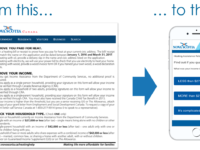
The Heating Assistance Rebate Program (HARP) helps over 42,000 low income Nova Scotians with the high cost of heating their homes in the winter. In 2016 Service Nova Scotia used an innovative approach to modernize HARP from a paper-based application to an online system to improve user experience and government processes. The modernization of this program was uniquely user-driven with significant user-testing leading the transition process and continuous user-testing for ongoing improvement.
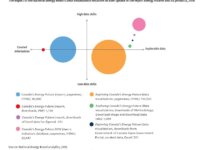
In 2016 the NEB launched the Data Visualization Initiative to face the challenge of producing usable and useful data to go beyond using new technologies to deliver better service to citizens. It created multiple products from the same information to expand public participation in the energy dialogue and enable evidence-based decision-making. These products include interactive data visualizations and other materials, such as high school lesson plans, as a new way to engage experts and nonexperts.
The Australian government is transforming employment services to improve how the system works for job seekers, employers and the community.
Transformational change requires genuine consultation to capture the diversity of views of stakeholders affected by changes, identifying pain points, testing ideas and laying the groundwork for sustainable policy reform.
A citizen centric approach helps to understand the real-world impact, leading to better outcomes and greater acceptance in the community.
Community Connects is a pilot project that came out of the Transportation Innovation Lab. Problem/Opportunity: Cape Breton Regional Municipality (CBRM) is a region with high levels of poverty and unemployment. Innovation: Taxi service, doorstep pick-up, defined drop-off points, flat rate: $7 seat. Why innovative? In short, the approach (social innovation lab) and those that were engaged (first-voice participants).
The Client Centric Policy Playbook strengthens the ability to engage clients in the design of program and service policies.
Through extensive engagement with policy experts and employees on-the-ground, the Playbook has brought together innovative best practices, tools and resources for engaging clients.
This solution enhances client experience by giving clients an opportunity to be part of the policy generation process and by ensuring that programs and services are reflective of their needs.
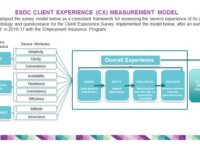
The Client Experience Measurement Survey Model was developed by Employment and Social Development Canada to gather and analyse client feedback to improve service delivery to its clients. Canadians have been able to express their views on government programs and services, which have informed the way programs and services are designed and delivered. The survey allows the tracking of service satisfaction, ease of access, effectiveness of service delivery, and the experience of particular programs…