
The Ukraine war established a commitment to work across sectors to improve digital services to refugees. Focus on end user needs and an unbureaucratic organizational model have produced tangible results such as:
Better update of address information in national register
Electronic identification - access to digital services
Twelve agencies worked with obstacles and bottlenecks in the refugee's user journey, with the objective of good transitions between services.
Innovation Tag: Transparency
The City of Seattle spends over $720 million every year. With the surge of COVID-19, small businesses were left in a highly vulnerable position, forcing many to shut down. This is especially true for women and minority-owned small businesses (WMBEs). We worked with the City to launch its e-commerce government marketplace, providing a platform for government buyers to seamlessly find local WMBEs, access their products and services, obtain quotes, and check out with a few clicks.
The Transparency+ Portal is a digital platform of the Portuguese state, where citizens can access easy-to-read and updated information on public spending in an accessible way, combining data science and storytelling. Launched in 2021, the platform is now a reference resource for monitoring European funds, State and local budgets, and public contracts. In a world often perceived through lens of mis/disinformation, Transparency+ is building trust by nurturing civic engagement and open government.

The Environment Agency has a responsibility to protect communities from flood and coastal risks. In the past, the agency has struggled to scale their public engagement and reach their diverse audiences, while also retaining a local relevance. Hello Lamp Post was brought on to provide an interactive, live 24/7 conversational channel to educate and inform the public on flood safety, in high-risk locations around the South West of England and Newcastle.
The rate of innovation often exceeds the speed at which regulatory systems can adapt, blurring lines between sectors and cutting across transitional regulatory and geographical boundaries. The RPF aims to keep the UK at the forefront of regulatory thinking and experimentation. It sponsors projects, led by regulators, aiming to help create a UK regulatory environment that encourages business innovation and investment. It is market-led and uses real-world innovation settings to deliver.
With the Quality Tools an organisation can evaluate, monitor and compare the quality and use of its services within and between organisations. The tools include a Self-assessment, Customer Feedback and Utilisation Rate Measurement tool and are free of charge. The tools were developed primarily for public sector organisations to help them develop customer-oriented digital services and improve knowledge-based management. On a national level the tools provide data on the state of digitalisation.
BORA (acronym for "Online Relationship Database for Evaluators", in Brazilian Portuguese) is an innovative online application developed by ENAP that connects research professionals and policy managers around the country. The app makes it possible to link the needs of Brazilian public administration for high-quality policy analysis and the research of well-targeted projects by specialists based on a quick, transparent and free solution.
Case Study
BIFIDEX – Official Business and Financial Analytics for the single market in the Western…
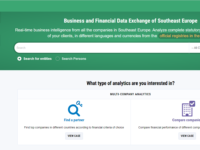
Countries in the Western Balkans created digital infrastructure to support transparent business operation and prevent fraud in their Common Regional Market. The official registries from 5 countries in the Western Balkans created a digital platform, connecting all official legal and financial data about companies, connected entities, blocked bank accounts and sanctioned persons, bridging different legislations, languages and currencies. The platform won the 2022 OECD/SIGMA/ReSPA award.
Governments around the world are censoring the Internet, but how can we document, track, and respond to Internet censorship events? In 2022, the Open Observatory of Network Interference (OONI) launched the Measurement Aggregation Toolkit (MAT) which hosts one of the largest open datasets on Internet censorship to date. In real-time, new measurements are published from around the world, enabling researchers, journalists, and human rights defenders to track and respond to censorship worldwide.
The PropTech Engagement Fund was launched in 2021 and has worked with 41 Local Authorities to date on accelerating the adoption of digital citizen engagement tools and transforming community involvement in placemaking. Our ongoing programme is the largest UK Government PropTech Programme, leading on how to work with industry, tech start ups and local governments to increase the diversity and positivity of placemaking conversations and to fast track new digital policy and local housing delivery.