

Despite ambitious climate pledges, a persistent “last-mile” gap remains: individual climate actions are often undervalued within existing frameworks. Gyeonggi Province addresses this gap by converting verified citizen actions into measurable public value and rewarding participants with local currency to support local economies. By reinvesting these rewards in climate technologies, the initiative transforms citizens from policy beneficiaries into active co-creators of a sustainable future.
Case Study Library
Where innovations are collected and shared to disseminate and replicate good ideas

Innovations:
0
This website, as well as any data and map included herein, are without prejudice to the status of or sovereignty over any territory, to the delimitation of international frontiers and boundaries and to the name of any territory, city or area.
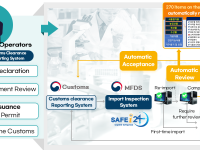
The Korean Ministry of Food and Drug Safety (MFDS) has developed SAFE-i24, an automated digital review system, to handle the growing number of imported food declarations. This allows inspectors to perform their duties more efficiently, and it has reduced unnecessary complaints. Additionally, importers can now process their declarations within five minutes, 24/7, saving both time and money during the customs clearance process.
A digital platform that provides strategic and prospective quantitative and qualitative information, specifically on trends, risks, opportunities, scenarios, future events, and other topics. It is designed for use, consultation, and input by planners and the general public. It seeks to reduce the information gap, ensuring the validity and up-to-date nature of data for the formulation of plans and policies, thus facilitating the anticipation of challenges and the exploitation of opportunities.
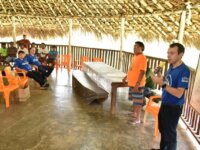
The "Programa Justiça Cidadã" in Brazil's Roraima state, led by the State Court of Justice, extends legal services to remote regions, including indigenous and riverside communities, addressing the needs of Venezuelan migrants. Through permanent service points and digital integration, it promotes inclusivity and accessibility, ensuring all residents can access legal support.
Career information systems are of utmost importance, especially in countries with a dense young population like Türkiye. The primary responsibility of career counsellors is to conduct guidance activities to assist individuals in making choices, decisions, and preparations for their future occupations and careers. To support this mission, the Career Counselling Information System has been developed and made available to career counsellors.
Case Study
Shared Services Center “ColaboraGov”: An Innovative Model for Delivering Administrative Services…
In order to enable strategic ministerial expansion without increasing costs, ColaboraGov centralizes the sharing of administrative support services among 13 ministries. It ensures savings in resources, gains in scale and quality, and standardized service provision. It comprises more than 41,000 civil servants, 374 services and has an impact on 10 areas - such as human resources, finance and logistics - thus making it easier for the government to direct its efforts towards final public policies.
“e-Qyzmet” is a central element of Kazakhstan’s digital public administration, fully automating HR processes and supporting national human resources policy.
By centralizing data and ensuring transparent recruitment, evaluation, and promotion, it eliminates favoritism and boosts meritocracy.
Covering 400+ HR processes across government bodies, the system enhances accessibility and sustainability in civil service.
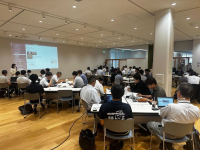
Digital Transformation Co-Creation Platform enables national and local governments to co-create policies and services through knowledge sharing and mutual learning. In Japan, diverse knowledge and challenges exist across about 1,780 local governments but are not adequately shared due to hierarchical communication structures. Digital Agency has developed a co-creation ecosystem where government officers nationwide can engage in open, flat, and two-way communications as individuals.
Complex government documents may confuse citizens, making it difficult to access services such as pensions or benefits. This work engages GenAI to rewrite these texts in plain language, maintaining legal accuracy while increasing clarity. Focused on the Service Pages of Italy's National Institute of Social Security portal, which serves 45 million users, AI surpassed human experts in user preference, enabling the Institute to communicate inclusively and at scale.
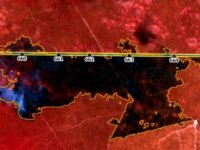
Wildfires is one of the main causes of blackouts in Brazil. To monitor the thousands of Brazilian Transmission Lines (TLs), ANEEL created the GGT System, which consists of a tool that uses Artificial Intelligence and satellite images processing to preventively inspect the maintenance of TLs against wildfires. With the GGT System, there was a 89% reduction in shutdowns caused by wildfires, representing a great improvement in the reliability of the electricity offered to the Brazilian population.