

The Future Mentors programme is a reversed mentoring programme in which a small group of young people mentor a decision maker from their own city about the hopes, dreams, and fears of the young generation regarding the future of their city. The programme is a platform for youth in cities to get into a dialogue with the decision makers and get their concerns and wishes heard. Twenty-six cities around Europe participated in the programme in 2022.
Case Study Library
Where innovations are collected and shared to disseminate and replicate good ideas

Innovations:
0
This website, as well as any data and map included herein, are without prejudice to the status of or sovereignty over any territory, to the delimitation of international frontiers and boundaries and to the name of any territory, city or area.

Less than 5% of Small Business (SBs) in Australia take out formal intellectual property protection, with many small business owners putting themselves at risk due to a lack of awareness about the need for Intellectual Property, especially at the point of establishing their business. TM Embed aims to engage these small businesses at critical points of their business journey by building awareness, educating them about trade marks, and simplifying the way in which they engage with the trade ma
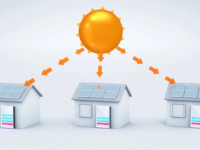
SA VPP is the largest network of home solar and battery systems lowering energy costs for thousands of public housing tenants while providing critical energy network services.
SA VPP has developed innovative approaches to:
Significantly reduced energy bills for vulnerable South Australians
Providing more access to renewable energy for more people
Proving new commercial models for financing renewable energy assets
Driving regulatory reform that accelerates Australia’s energy market…

The Latrobe Health Assembly has undertaken a co-design process with service providers, government and people with lived experience to develop an innovative mental health cafe model for Latrobe City. The cafe has and continues to involve people with lived experience at all levels. It aims to: increase opportunities for peer support and social connection; reduce emergency department presentations for non-emergency mental health issues; and improve mental health consumer experiences and outcomes.

In 2020, the health department in Queensland Australia piloted a novel form of government-university partnership to multiply the department's capacity for frontline clinical innovation. Building on the significant success of our pilot year, this award winning program has evolved into a dynamic ecosystem of clinicians, consumers and academic experts with an enviable track-record of diverse service transformations. This model is now being emulated by many local health services across the State.
Transformation Wagen - "Daring Transformations" is a learning programme co-developed with and for public servants in the field of Environmental Politics in Germany. Aiming at enhancing tools for public administration to renew itself, it creates capacities and methodologies to handle major societal challenges and foster a transformative mindset to actively shape the future and not just react to what is happening.
Launched by President Emmanuel Macron at the Open Government Partnership (OGP) Summit in 2021, the Citizen Initiative Accelerator supports citizen-led projects that serve the public good. After being screened by the public administration and a panel of citizens, the selected projects benefit from a 6-month tailor-made support to accelerate their development. This unique program promotes new modes of cooperation between the state and civil society in order to achieve what we call "augmented…

The Anti-Corruption Digital Marketplace (MDA) is the first space developed by a public institution in the history of Mexico, in which public institutions can share free and ready-to-use digital tools, in order to streamline and promote innovation and cooperation among those that need either software, or other digital resources to achieve common goals in addressing corruption. The MDA contains more than 22 tools, some of them have been developed by other national or local level public…

Ethical delivers is a home delivery platform founded in 2020 to address the needs raised by the Coronavirus pandemic as an alternative to extractive capitalist platforms. It provides basic goods and services while respecting workers' rights and environmental sustainability. Designed following cooperative principles through an urban codesign process, it has clear pillars: a fair rider salary, the use of vehicles that minimise environmental impact, and a more direct relationship with small…
There are plenty of innovative initiatives that never manage to reach the public sector, generating inequalities in access and quality in the provision of solutions. GovtechLab Madrid is the first open innovation Lab located inside of the Community of Madrid. The focus of the Lab is on reducing the barriers and accompanying both the supply and demand sides in finding solutions and opportunities to implement them.