

Based on the idea that cultural consumption is important both for enriching yourself as a person and strengthening the fabric of our society, in 2016 the Italian government introduced a 500€ cultural bonus for all 18-year-old people living in Italy. Young people can spend it on cultural items and activities such as going to theatres, concerts and museums, buying books, etc. They have to register online and then spend the money through the dedicated website 18app.it, accessible from any device.…
Case Study Library
Where innovations are collected and shared to disseminate and replicate good ideas

Innovations:
0
This website, as well as any data and map included herein, are without prejudice to the status of or sovereignty over any territory, to the delimitation of international frontiers and boundaries and to the name of any territory, city or area.
Originally conceived as a planning tool, HeritageMaps.ie is a user-driven, web-based mapviewer focusing on the built, cultural and natural heritage around Ireland and offshore. Its potential for use by the general public was quickly realised and users can now access 700+ up-to-date heritage datasets in map-form, originally provided across many Govt. platforms. HeritageMaps.ie a free ‘one-stop-shop’ for heritage data and acts as a discovery portal, providing direct links to promote research.
The Louisville Metro Badge Program rewards employees for tasks like creating an open dataset, crowdsourcing information from citizens or collaborating with other departments on projects. There’s a tiered reward system for civil servants who participate, with prizes ranging from LinkedIn recommendations to recognition at a city-wide awards ceremony.
Adur and Worthing Councils implemented a low code development platform to help them take control of their digital transformation. A small digital team is building end-to-end user-centred digital services that are replacing expensive and inflexible legacy systems. Low cost, fast and flexible, this pioneering digital strategy has delivered multiple customer and efficiency benefits, won national awards and central government recognition.
Office of Legislation has introduced a single national legal information system offering to the public the information on adopted laws, regulations and other legal acts free of charge, including EU and national case law, consolidated texts, and other information with significant impact on the application of national law. In addition to efficient and quick search through all sources of law, users can easily monitor the process of planning and adopting laws and regulations.
The MSIP Observatory is an interactive tool presenting spatial data of the City of Krakow useful for residents, investors, tourists and anyone interested in our city. The map consists of many layers presenting different kinds of information i.e on architecture and urban planning, nature protection and ecology, administration and security, tourism and history of the city. It's interactive and user-friendly and it implements the idea of open government and open data.
Latvia’s E-index is the first national-level initiative helping central government institutions and municipalities to evaluate and recognize their level of digital transformation, foreseen solutions and learn from other institutions. This enables and motivates the development of the e-environment. Within the spirit of positive competition, the common goal is raising awareness of digital transformation, learning about policy and tools, and increasing quality and accessibility of services to…
The integration of health and social care was seen by the Scottish government to require support to ensure that benefits of both national and local data and knowledge were able to be shared across two very different cultures and service providers to jointly develop more appropriate services for local populations.
LIST using their expertise in analytical work was seen as a way to develop a sound evidence base to allow decision makers to develop effective services.
BPA or technology-enabled automation of rules based business processes was identified as an opportunity to streamline the operational business of the Organisation, to achieve simplicity, improve service delivery and reduce costs. The innovation engages BPA to digitally transform workflows from conventional data manipulation and record-keeping functions, to efficient automated systems. BPA has benefitted front line staff, where the burden of processes has transferred from humans to technology.
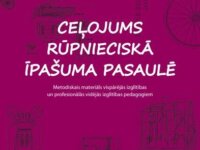
EUIPO studies show that young people are lacking information on intellectual property, and the available information is presented in an ineffective way for the specific age group. Starting the new 2018/2019 school year in Latvia, general education, academic secondary education and vocational secondary education teachers will have the opportunity to integrate intellectual property issues in their lessons, thus contributing to the formation of a responsible and innovative new generation.