
Globally, public procurement is in desperate need of reform and must embrace the tools, techniques and culture of the digital age. It’s a government’s top corruption risk as it’s where money and discretion collide.
The UK has begun to address this; GDS is leading the Global Digital Marketplace project, which is embedding user-centred, design-led, data-driven and open approaches across digital, data and technology planning, procurement, contracting and service delivery.
Case Study Library
Where innovations are collected and shared to disseminate and replicate good ideas

Innovations:
0
This website, as well as any data and map included herein, are without prejudice to the status of or sovereignty over any territory, to the delimitation of international frontiers and boundaries and to the name of any territory, city or area.
The OGC framework allows governments to work together to build useful tools for us all at no cost. Governments become project managers and private companies pay developers to do the work to spec and publish the cloud infrastructure-as-code online for any other entity to use for free.
We have a successful mobility project with over 80 governments, multiple public-sector entities, and private sector companies to fund and build it, and there are 3 other projects under development.
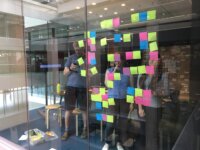
Every week millions of people use the UK government's GOV.UK website to do complex and sometimes life-changing tasks, such as learning to drive, getting a visa, or starting a business.
In the past, finding the guidance, forms and online services you needed could be difficult and time-consuming.
Step-by-step navigation is a new feature on GOV.UK that allows any service to be represented as a series of simple steps.
There are two projects to co-build the relationship change between administration and farmers, organised by the group “Les IdéaCteurs” :
- “la parole aux jeunes” an innovative form of debate with 80 technical students to become farmers
- a creative session “pour simplifier la vie des agriculteurs” organised in june 2018, with 40 people (half of farmers, half of public officers) which allowed, in a very constructive climate, to generate around 20 ideas about 3 possible axes of…
This innovation was developed in order to help to prevent interferences, providing a solution for booking frequencies in the general authorization bands.
The main innovation is that this solution is based on the blockchain technology, and open to everybody. This way, our solution guarantees the integrity, the immutability, the transparency, the traceability, the audibility of the reservations of frequencies.
Case Study
Certificado Único de Discapacidad (CUD) – Redesign of the granting service of the Unique…
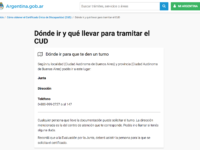
Obtaining a Certificado Único de Discapacidad (CUD, a disability certificate) in Argentina was a complex, painful and difficult process. It was a citizen’s right, but did was not a digital service. The process lasted up to 7 months and had 4 steps. There is now one step. A wizard guides citizens in the requirements of the application, an online appointment system schedules the interview and proactively provides notifications in the citizen's digital profile. The redesign of the service put…
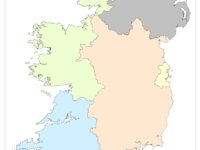
Climate change requires comprehensive responses at local and regional level which makes local government critical to the delivery of national and international policies. The establishment of four Climate Action Regional Offices (CAROs) as Centres of Excellence based on distinct geographic/topographic characteristics enables them to advise local authorities in their region on climate action strategies ensuring a coordinated response and assisting with the roll-out of national/regional policies at…
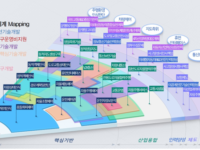
The Government of Korea is beginning to implement a new innovation investment model, 'R&D PIE', which leverages big data analytics and machine learning in order to assess disruptive changes in the technology landscape, and to identify overlaps and potential opportunities across the Korean ministries. Through this, the government has a way of identifying missing links in the innovation initiatives, fostering collaboration among agencies, universities, and companies, and solving social problems.
This project is about how new transportation technologies can be integrated into an existing public transit system. The City of Lincoln successfully tested a demand-responsive autonomous microtransit vehicle that operated in the University of Nebraska's Innovation Campus. Use of autonomous microtransit vehicles in public sector transportation systems will play a critical role in ensuring safe, efficient, affordable and equitable access to many people across the world well into the future.
With the drafting of its first Constitution, Mexico City had a great opportunity: to explore innovative ways of crowd-sourcing this historic document, setting an example to other cities in the world on how to design important democratic experimentation at the scale of a megalopolis. The result of the entire Constitutional process is a forward-thinking document with progressive social policy and human rights at its heart. It became a legal reality in September 2018.