
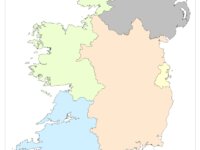
Climate change requires comprehensive responses at local and regional level which makes local government critical to the delivery of national and international policies. The establishment of four Climate Action Regional Offices (CAROs) as Centres of Excellence based on distinct geographic/topographic characteristics enables them to advise local authorities in their region on climate action strategies ensuring a coordinated response and assisting with the roll-out of national/regional policies at…
Innovation Tag: Cross-Sector Partnerships
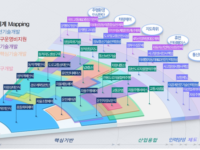
The Government of Korea is beginning to implement a new innovation investment model, 'R&D PIE', which leverages big data analytics and machine learning in order to assess disruptive changes in the technology landscape, and to identify overlaps and potential opportunities across the Korean ministries. Through this, the government has a way of identifying missing links in the innovation initiatives, fostering collaboration among agencies, universities, and companies, and solving social problems.
The Lab is an all-of-government neutral space enabling agencies to collaboratively innovate to make it easier for people to access government services. It's a design & development lab to experiment, drive and enable the systemic change of government for the benefit of society. We are providing a way to direct public funding to systemic improvements, horizontal efforts around shared goals, capability uplift, high value reusable components and actionable innovation for all participating agencies.
The Finnish Government has piloted a new innovative operating model based on co-creation and networking widely within the society. This so-called ‘The Ecosystem Forum’ aims at boosting human-centric digitalisation policy and data economy. It is a new way to formulate policies, prepare decisions and improve implementation. The forum is led by the State Secretary at Prime Minister's Office. In addition, the Prime Minister's Office has an active role in the facilitation of the network.
Case Study
“Joint effort towards best results” Result oriented management and stakeholders engagement as an…
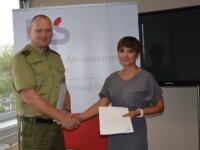
In light of the merger of three fiscal agencies into one, the Opolskie Revenue Administration developed a management model aimed at achieving the best results which is tailored to the needs and expectations of employees and the surrounding society. The new management model obtained a better understanding of the tax administration's mission by the local community by focusing on: user-centricity; stakeholder involvement in tax office to show transparency and public involvement; and listening…
This programme was developed to address critical strategic challenges in the Criminal Justice Sector in Ireland so as to enhance sectoral leadership and public value. A cross agency collaborative learning and implementation methodology was used. High profile reviews of deep seated cultural and procedural challenges have inspired this programme. The IPA and agencies across the criminal justice system have taken an innovative approach to collaboration, learning and implementation. .
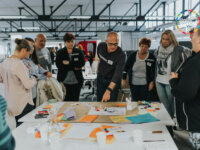
The Government of Slovenia has developed a new approach to preparing government services and public policies. Through specially designed workshops with a 360° approach to different stakeholders, these so-called ˝Policy Jams˝ aim to develop citizen-centred policy solutions. Based on systems theories and service design principles they open up the discussion space, while gearing participants toward finding viable innovative solutions.

Highway Interchanges are often highly congested. Solving it with traditional measures is costly. With the first Diverging Diamond Interchange (DDI) in Europe, road users change lanes when passing over the highway with fewer conflict points, enabling more capacity, improved safety and less congestion. The Danish DDI has a high return on investment. It was brought to life by an open innovation collaboration between the Danish Road Directorate and the Missouri Department of Transportation.
The Portugal Participatory Budget (PPB) is a democratic, direct and universal process that allows civil society to decide on public investments in different governmental areas.
It is the first nationwide public participatory budget in the world, enhancing its originality. PPB helps to bring people closer to politics and decision-making, while promoting a deeper connection between regions, integrating the coastline and interior areas, as well as the rural and urban areas.

The Free Education platform is an open and collaborative learning space that seeks to awake the interest of Brazilian youth in their personal and professional development. It is a free, open platform, and its practical, interactive content is especially directed at lower income youths (between the ages of 16-24), that have not completed high school and do not have the necessary skills to find employment or interest in continuing their studies through formal education.