
The Northern Ireland (NI) Public Sector Innovation Lab has organised a hackathon, “Hack the Pain,” to address these needs of an underserved group: people with persistent pain. These individuals need for better information services for self-management, and the projects that emerged from the hackathon include a virtual reality app for mindfulness, a pain tracking app and a website of information on pain management techniques.
Innovation Tag: Data
Open policy-making is an opportunity for government and stakeholders to move from linear, polarized, single-issue, interest-based considerations to interactions that are networked, collaborative, opportunity-based and where complexity is viewed as an asset. Adapted for the Government of Canada context, Pol.is is a cost-effective and highly scalable, digital engagement platform that can be used as part of broader strategies to put people and robust evidence at the heart of government decisions.

A new waste management system, driven by information. Bogota has evolved its cleaning and recycling scheme, generating a profound transformation in the way in which citizens needs are met and garbage collection is managed. This model is based on the effective use of data and information. This initiative has allowed greater transparency in the actions of involved public and private organizations, an intense collaboration to provide the best service and enabling citizens active participation.

Reliable transportation is the primary barrier to stable employment for shift workers. Our solution leverages existing technology to provide “transportation as a benefit” through an integrated network of on-demand transportation options. We will quantify savings for employers due to reduced turnover and increased employee productivity, incentivizing them to fund the program long-term.
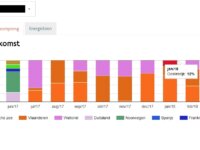
The energy regulator of Flanders, Belgium, has launched a new interactive online tool, ‘GreenCheck 2.0’, allowing each citizen and company to check the characteristics of the electricity supplied to their home, such as the percentage of renewables, the country of origin and the energy source.
This way, the government caters to the increasing demand for green contracts, the need for transparency from suppliers and the government, while overall empowering the liberalization of the energy…
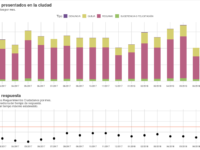
Bogota’s Citizen Complaints Dashboard (Tablero Control Ciudadano) is a preventive and social control web tool that displays the requirements that the citizens put before the public offices. The Citizen Complaints Dashboard gives access to public officials and citizens to the analysis and monitoring of complaints, claims and compliments entered into the System.
The Citizen Complaints Dashboard highlights alerting data related to issues regarding time of attention to the requirements as well as…
Louisville, like many cities, experienced a spike in homicides starting in 2016. Recent deployment of gunshot detection technology has been effective at pinpointing where and when gunshots occur. On average, police officers arrive long after the critical, first ten minute window to stabilize injuries. Placing drones strategically throughout our city, we will be able to deploy a camera to the scene within 90 seconds of when a gun is discharged and rapidly dispatch emergency medical personnel.
Case Study
Potential for mapping the world’s land resources using satellites and artificial intelligence: an…
The Queensland Government is using machine learning and computer vision to automatically map and classify land use features in satellite imagery. Successfully applied to the mapping of banana plantations, the method is extremely efficient compared to current methods of mapping compilation. Using this technology the Queensland Government can accurately map and classify the land use in a timely manner, aiding response to biosecurity and natural disaster events.
Case Study
Ensuring Impartiality through Identity-Neutrality Provisions: the Case of Freedom of Information in…
The Internet has facilitated online services for citizens, but it has also facilitated Internet searches of service-seeking citizens by public officials, triggering conscious or unconscious bias. Via freedom of information (FOI) requests, academics provided evidence of this phenomenon at work. Brazil's Comptroller General (CGU) responded by implementing a check-box in its online FOI requesting system so that requesters could choose to remain anonymous. This innovation is a first for FOI regimes.
Case Study
Integrating Design and Behavioural Insights to increase the take-up of an education savings program…
The Canada Learning Bond, a government education savings program providing a financial incentive to low income Canadians, turned to behavioural insights (BI) to tackle persistent low take-up. Following unsuccessful BI trials based on academic literature and expertise, we turned to Design. In a Government of Canada first, combining lessons learned from human centred design processes including stories from citizens and BI we developed outreach that significantly improved the take-up of the Bond.