
The Disciplinary Maturity Model (CRG-MM) is a pioneer model in Brazil and is an operational and strategic tool aimed to evaluating and improving the management of disciplinary activity, through the definition of quality standards based on management and public governance procedures. This innovation seeks to provide greater stability and security to executors and managers of disciplinary activity, considering its role as a public integrity instance in the fight against corruption.
Innovation Tag: Evaluation and Oversight
Governments must judge hundreds of new programmatic budget proposals each fiscal year with little objective information about whether they will achieve the results claimed. Evidence of program effectiveness is a critical data point that is used when making budget and policy decisions, as programs with greater evidentiary support are generally more likely to deliver a high return on investment of public funds. The The Policy Lab at Brown University leveraged existing public clearinghouses of peer…
The UK Government Policy Profession has piloted a new model called Shared Policy Capability Project to support department leaders and policy makers undertake a facilitated self-assessment of their policy environment and identify opportunities for improvement. Through this the government aims to build capability at a department level and enable policymakers to take an active role in improving the environment in which they make policy.
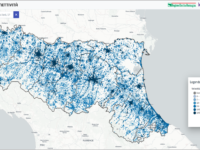
Emilia-Romagna’s Digital Agenda led a significant innovation process for public administration decision-making. The process resulted in a co-design phase with local administrations to structure and publish online the first geo-referenced regional Observatory on ultra-broadband connectivity in Italy. Multi-stakeholder participation made it possible to identify and highlight the various strengths and weaknesses of the tool, enabling its optimisation.
Case Study
Voluntary Removal of Regulatory Barriers to Competition: Using Social Norms to Nudge Government…

INDECOPI has implemented a new project called “Voluntary Removal of Regulatory Barriers to Competition” based on the use of social norms in official documents and data dashboards to monitor the removal of bureaucratic barriers across the country. Through this, civil servants compare their performance in eliminating barriers with their peers and adapt their behavior towards high-quality regulation.
„Gemeinsam Digital: Berlin“(Together Digital: Berlin) combines the digital and smart city strategies. We define smart as solving future challenges in creative, open, experimental and participatory ways. This strategy helps to establish new work approaches, agile methods, competence building, and a systematic knowledge transfer between the administration and its inhabitants. By aligning technologies, methods, and cultural processes, it supports existing strategies to reach their respective…

The NSW Government has developed a whole of government spatial tool to improve planning and pre-development processes. The tool modernises the traditional approach to strategic planning, site assessment & land use evaluation and provides user friendly access to GIS capabilities where multiple agencies can work together on a project in NSW public sector. Through this, government agencies are enabled to make faster, better informed, more transparent and consistent decisions on NSW land.
Case Study
Innovation Zones, Facets and Beyond – LIEPT (Lund Innovation Ecosystem Portfolio Tracking)…
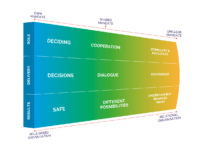
To provide a systematic approach for initiating and tracking collaborative development processes over time and inform investment decisions in multi-stakeholder environments, Future by Lund (FBL) has implemented a new model for innovation ecosystem portfolio tracking (LIEPT). The model benefits partnering stakeholders by building strategic competence for scaling solutions and working with innovation portfolios as an approach for governing and developing the ecosystem’s priority areas.
The AJSC has developed a new model to measure the determinants of the ‘quality of life’ in Ajman, covering six key areas of public service. The Model comprises a comprehensive factor measurement framework embedded on a sophisticated web-based application, with inbuilt protocols for scientific data collection, project management, data visualization and reporting. It systematically measures gaps and impact of interventions, via targeted performance assessment of framework factors.
Case Study
Procurement Planning Platform (PPP) for driving Sustainability, Circularity and Innovation in Lisbon…
Lisbon Municipality aims for more innovation and sustainability in Public Procurement. Urgency and specifications' complexity are excuses for not considering sustainability in tenders and barriers to attracting innovative SMEs and startups. The innovative approach involved users designing and developing the Procurement Planning Platform, using a rapid development tool, cloud-based, and agile methods, which selects and supports a project-led approach for deploying new procurement strategies.